

Every homeowner wants that thick, green lawn that looks like it belongs on a golf course. But the truth is that most American lawns are either being watered too much or not nearly enough, and both mistakes cause the same result: a yard that looks stressed, patchy, and nothing like what you were hoping for.
If you have been asking yourself how often should you water your lawn, you are asking exactly the right question. Watering frequency is the single most impactful decision you make for your lawn, more than fertilizer, more than mowing height, more than anything else. Get it right and your lawn practically takes care of itself. Get it wrong and no amount of other effort will compensate.
This guide answers how often should you water your lawn completely, covering every variable that affects the answer including your grass type, your climate, your soil, and the season you are in.
Why Watering Frequency Matters More Than You Think

Before answering how often should you water your lawn, it helps to understand what water actually does inside your grass and soil. When you water your lawn, the goal is not simply to wet the surface. It is to push moisture deep enough into the soil that grass roots are encouraged to grow downward in search of it.
Deep, infrequent watering produces deep roots. Deep roots make grass resilient to drought, heat, foot traffic, and disease. Shallow, frequent watering produces shallow roots. Shallow roots make grass entirely dependent on you to survive, and the moment you miss a watering or temperatures spike, the lawn shows it immediately.
Most American homeowners water their lawns too often and not deeply enough. They run the sprinklers for fifteen minutes every day and wonder why their lawn looks thin and stressed despite being watered constantly. The answer is that daily shallow watering is training the roots to stay near the surface where the moisture is, rather than growing down where they would find stability and resilience.
The EPA (https://www.epa.gov/watersense/watering-lawn) estimates that the average American household uses about 320 gallons of water outdoors per day during summer, and that nearly half of that is wasted through overwatering, evaporation, and runoff. Knowing how often should you water your lawn is not just good for your grass. It is one of the most meaningful water conservation steps a homeowner can take.
The General Rule: How Often Should You Water Your Lawn
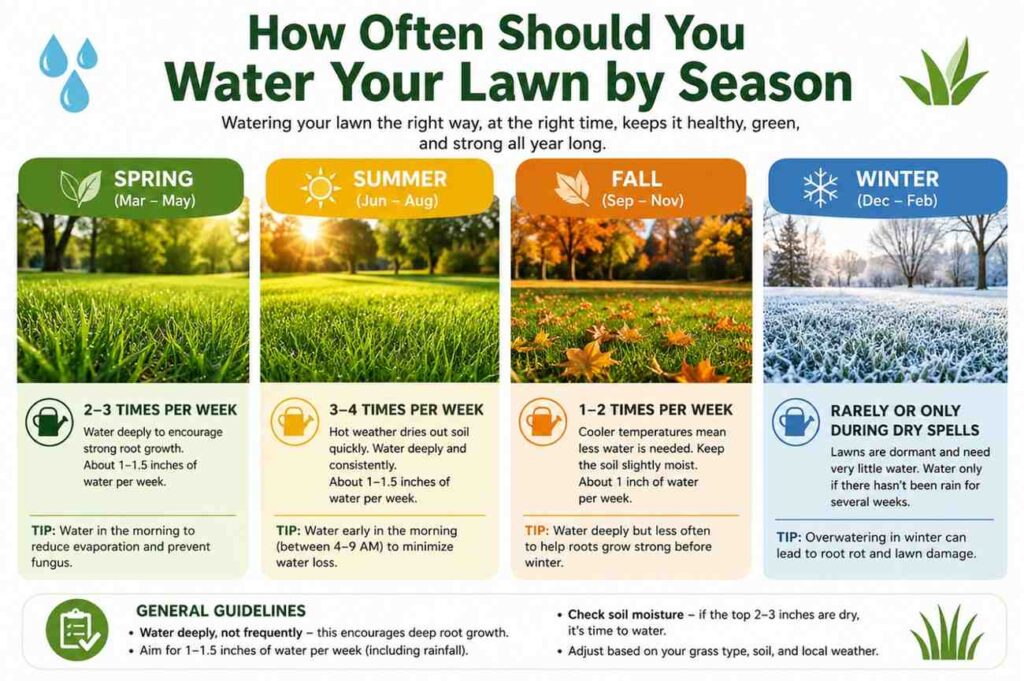
The foundational answer to how often should you water your lawn is this: most lawns need about one to one and a half inches of water per week, delivered in two to three sessions rather than daily. Two longer sessions per week is better for your lawn than seven short ones.
Each watering session should run long enough to push moisture six inches into the soil. This is where the root zone of a healthy lawn lives, and getting water to this depth is what encourages the deep root growth that makes a lawn genuinely healthy rather than just green on the surface.
The easiest way to check whether you are watering deeply enough is the screwdriver test. After a watering session, push a standard screwdriver into the lawn. If it slides in easily to a depth of six inches, you have watered enough. If it meets significant resistance before that, your watering session needs to run longer.
How long that takes depends on your sprinkler system, your soil type, and your water pressure. A simple way to measure output is to place several empty tuna cans around the lawn while the sprinklers run and see how long it takes to collect half an inch of water in each can. That time, doubled, is how long each session should run to deliver one inch of water.
How Often Should You Water Your Lawn by Season
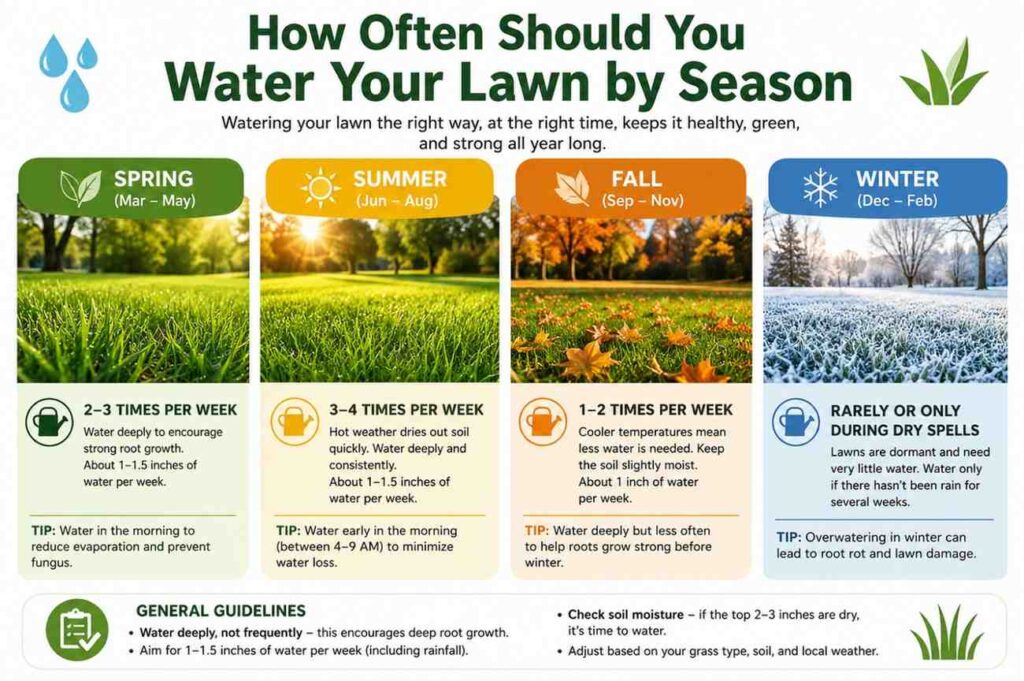
The answer to how often should you water your lawn changes significantly with the seasons, and following a single year-round schedule is one of the most common lawn care mistakes American homeowners make.
Spring
In spring, your lawn is coming out of dormancy and beginning to grow actively again. Rainfall is typically more frequent across most of the United States during spring, which means your irrigation system should be doing less work, not running on the same schedule as summer.
Water once a week in early spring if rainfall is insufficient, and let the lawn tell you when it needs more. A healthy spring lawn with adequate rainfall may need very little supplemental irrigation at all. Overwatering in spring encourages shallow root development and fungal disease at exactly the time when you want roots going deep before summer heat arrives.
Summer
Summer is when the question of how often should you water your lawn becomes most urgent, and the answer changes based on where you live. In hot and humid regions like the Southeast, natural rainfall may still carry significant load even in summer. In hot and dry regions like the Southwest, the full irrigation burden falls on you.
As a general rule during summer, water two to three times per week and water deeply each time. Water in the early morning, ideally between 4 AM and 9 AM, so the grass has moisture available during the heat of the day and the surface dries before evening. Watering at night leaves moisture on the grass blades overnight which promotes fungal disease.
In extreme heat above 95 degrees Fahrenheit, your lawn may show signs of heat stress even with adequate watering. Some browning and dormancy during extreme heat is normal and does not mean your watering frequency needs to increase dramatically. Lawns are designed to go dormant under stress and recover when conditions improve.
Fall
Fall is the second most important season for lawn watering after summer. As temperatures drop and rainfall typically increases, your watering schedule should scale back significantly. Water once a week in early fall and reduce to once every ten to fourteen days as temperatures cool further.
Fall is also when your lawn is storing energy for winter and developing root depth. Consistent but moderate moisture during fall supports this process. Overwatering in fall, particularly in regions that experience frost, increases disease susceptibility and can weaken the lawn going into winter.
Winter
In most northern states, lawn watering stops completely in winter once the grass goes dormant. Running irrigation over frozen ground is wasteful and pointless. In southern states with warm-season grasses that remain active year-round, light watering once every two to three weeks may be appropriate during dry winter periods.
How Often Should You Water Your Lawn Based on Grass Type
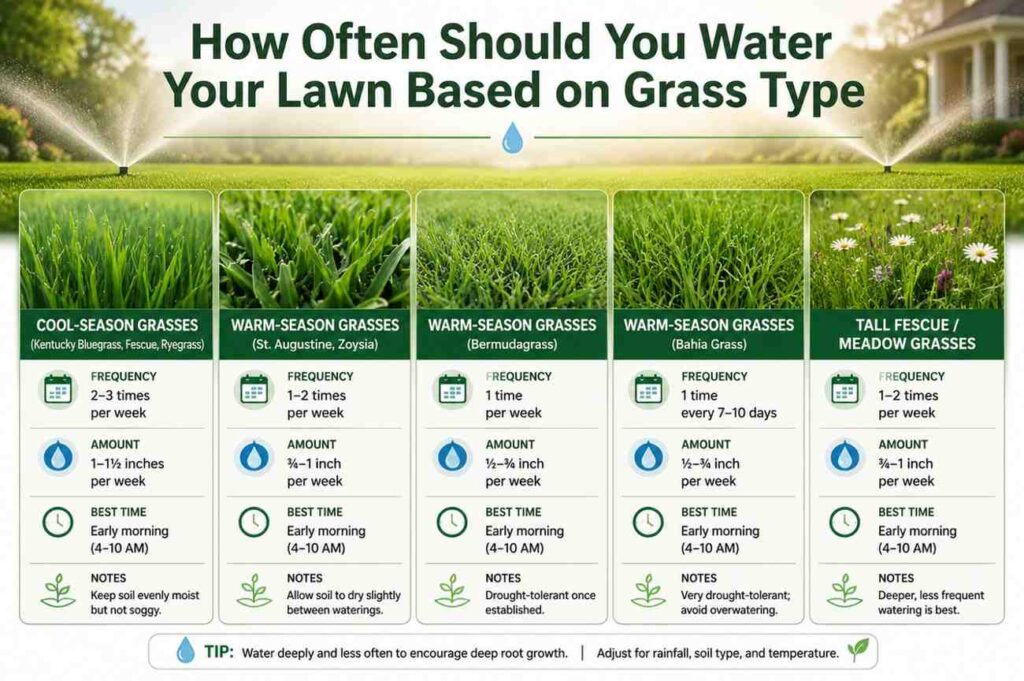
Grass type is one of the most important variables in answering how often should you water your lawn, because different grasses have fundamentally different water needs and drought tolerance.
Cool-season grasses including Kentucky bluegrass, tall fescue, and perennial ryegrass are common across the northern United States and prefer the one to one and a half inch per week standard. They are most active in spring and fall and naturally slow down or go dormant in summer heat. Allowing cool-season grass to go partially dormant in mid-summer rather than pushing it with heavy irrigation is often the healthiest approach.
Warm-season grasses including Bermuda grass, Zoysia, St. Augustine, and Centipede grass dominate lawns across the southern United States and generally require less water than cool-season varieties once established. Bermuda grass in particular is remarkably drought tolerant and can survive on significantly less water than most homeowners give it. Overwatering Bermuda grass produces a lawn that is lush but weak, with shallow roots and high disease susceptibility.
The University of California Cooperative Extension (https://ucanr.edu) provides region-specific watering guides for most major grass types grown in American lawns, and consulting a resource specific to your grass type and climate zone will give you the most accurate answer to how often should you water your lawn for your specific situation.
How Soil Type Affects How Often You Should Water Your Lawn
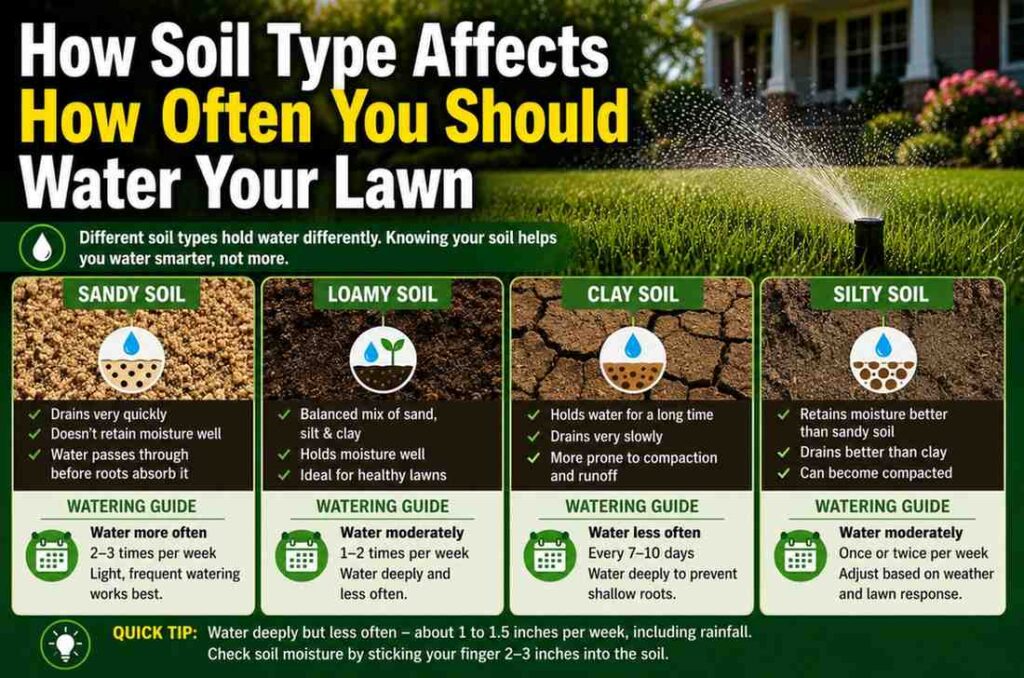
Soil is the variable that most homeowners overlook entirely when figuring out how often should you water your lawn. The same amount of water behaves very differently depending on what kind of soil it falls on.
Sandy soil drains extremely quickly. Water passes through it rapidly and the root zone dries out faster than in other soil types. Lawns on sandy soil typically need more frequent watering but shorter sessions, because running long sessions simply pushes water below the root zone where it is wasted.
Clay soil is the opposite. It absorbs water slowly and holds it for a long time. Lawns on clay soil need less frequent watering but are also at higher risk of overwatering because water drains so slowly that the soil stays saturated long after a session ends. Clay soil lawns often benefit from watering in two shorter sessions with an hour between them, allowing the first round to absorb before more is added.
Loamy soil, which is the balanced mix of sand, silt, and clay that most gardeners aim for, holds moisture well while still draining adequately. Lawns on loamy soil respond best to the standard twice weekly deep watering schedule.
If you are unsure what type of soil your lawn sits on, a simple test is to take a handful of moist soil and squeeze it. Sandy soil falls apart immediately when you open your hand. Clay soil holds its shape and feels sticky. Loamy soil holds its shape briefly but crumbles easily when pressed.
Signs Your Lawn Is Not Getting Enough Water
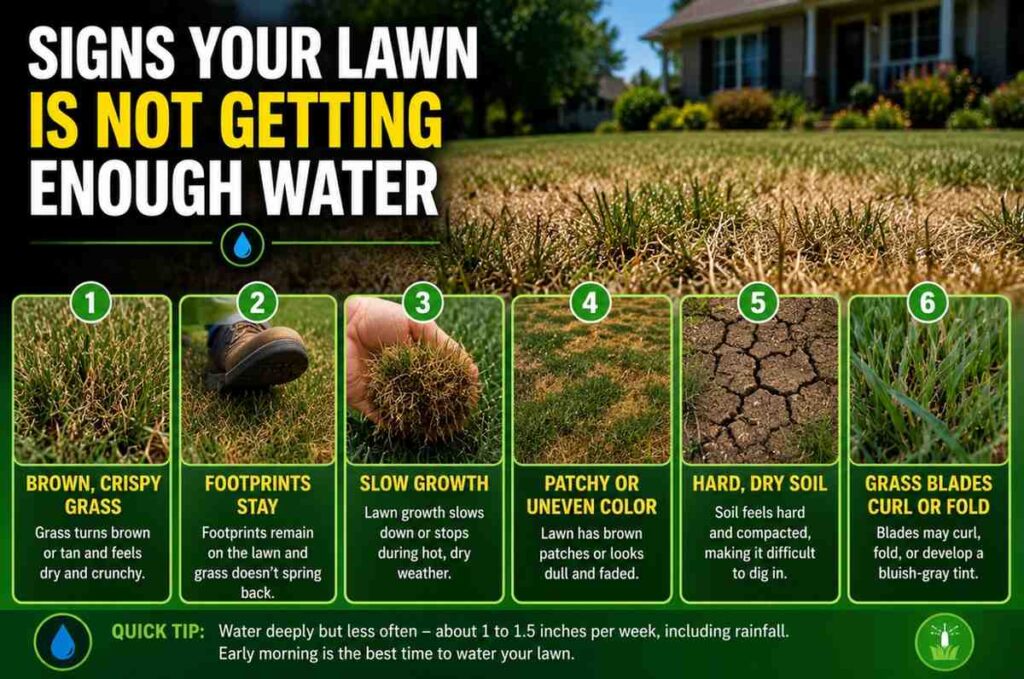
Knowing how often should you water your lawn also means knowing what an underwatered lawn looks like before the damage becomes severe.
The first sign is color change. A lawn that needs water shifts from bright green to a dull blue-green or grayish tone before it turns brown. This color shift is the grass beginning to conserve moisture and is the ideal time to water.
The footprint test is one of the most reliable indicators. Walk across your lawn and look back at where you stepped. If the grass springs back within a few seconds, it has adequate moisture. If your footprints remain visible for more than thirty seconds, the grass blades lack the turgor pressure to recover, which means the lawn needs water.
Wilting or folding grass blades, a lawn that feels crunchy underfoot, and soil that is hard and cracked at the surface are all signs that the lawn has been underwatered for long enough that stress has set in.
Signs You Are Watering Your Lawn Too Much
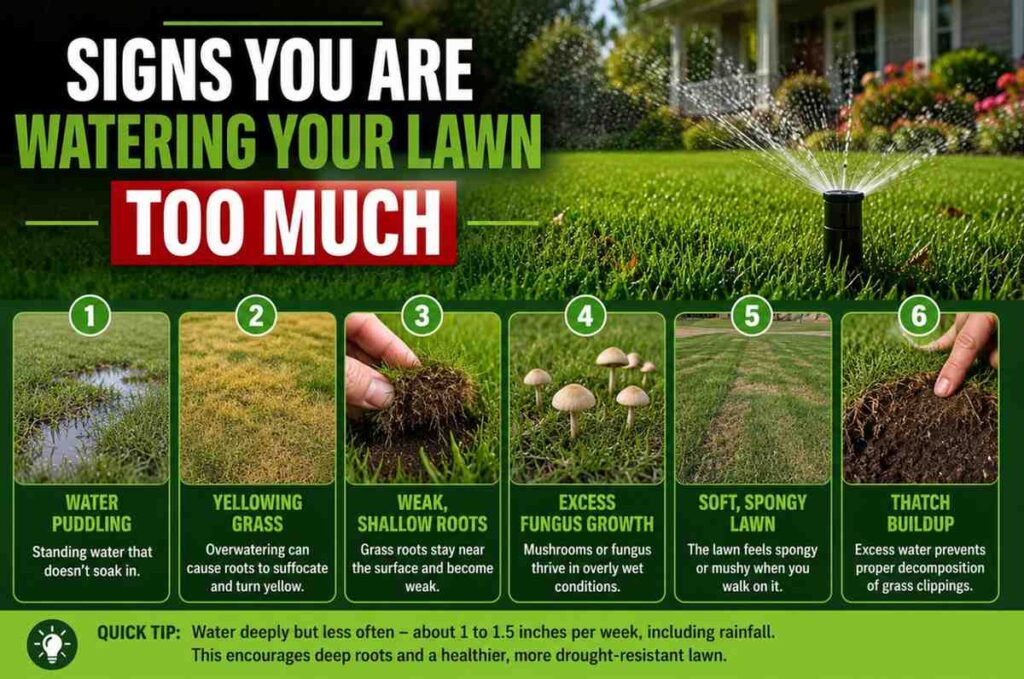
Overwatering is at least as damaging as underwatering, and it is far more common among American homeowners. If you have been asking how often should you water your lawn and your current answer is every day, there is a very good chance you are overwatering.
Signs of an overwatered lawn include grass that feels spongy or soft underfoot, the presence of mushrooms or fungal growth, runoff during or after watering sessions, yellowing grass despite frequent watering, and a persistent smell of mildew or decay near the soil surface.
Thatch buildup is another indicator. Overwatered lawns develop thick layers of thatch, the spongy layer of dead grass material between the soil and the living grass blades, because the shallow root systems created by frequent light watering die and accumulate faster than they decompose.
If you recognize these signs in your lawn, the solution is to reduce watering frequency immediately, allow the soil to partially dry between sessions, and aerate the lawn if thatch has become significant.
The Best Time of Day to Water Your Lawn
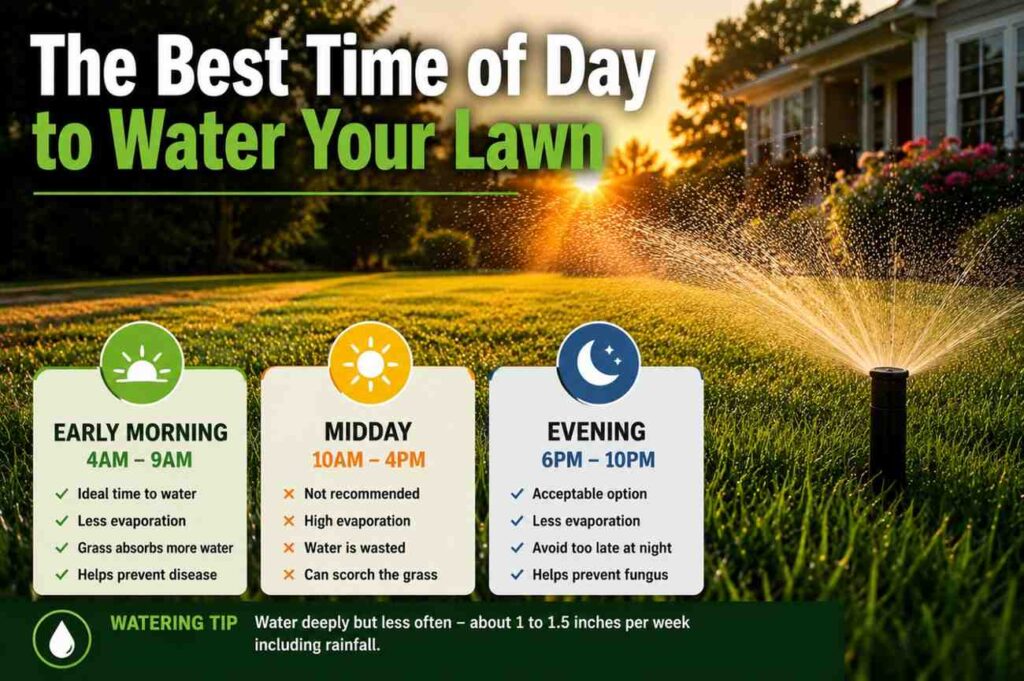
This detail is often overlooked when homeowners think about how often should you water your lawn, but timing matters almost as much as frequency.
Early morning is the best time to water, between 4 AM and 9 AM. At this time of day, temperatures are low, wind is typically calm, and evaporation is minimal. Water applied in the morning reaches the soil efficiently and the grass surface dries as temperatures rise through the day, reducing disease risk.
Midday watering wastes significant water to evaporation and does not cool the grass as effectively as many people believe. Evening watering keeps the grass blades wet overnight, which creates ideal conditions for fungal disease to develop.
If you have an automatic irrigation system, programming it to run in the early morning hours is one of the simplest and highest-impact adjustments you can make for lawn health.
Final Thoughts on How Often Should You Water Your Lawn
The complete answer to how often should you water your lawn is not a single number. It is a combination of your grass type, your soil, your climate, the current season, and the specific conditions your lawn is dealing with right now. But the principles that govern a healthy watering schedule are consistent across all of these variables.
Water deeply and infrequently. Water in the morning. Pay attention to what your lawn is telling you rather than running a fixed schedule regardless of rainfall or temperature. And remember that the goal of watering is not a wet lawn. It is a lawn with deep, resilient roots that can handle whatever the season brings.
Follow these principles and the question of how often should you water your lawn will answer itself through a yard that stays green, stays healthy, and requires less intervention from you with every passing season.
1 thought on “How Often Should You Water Your Lawn for a Healthy Green Yard”