

Here is a truth most homeowners learn the hard way: a small problem ignored in spring becomes an expensive emergency in winter.
A clogged gutter. A hairline crack in the driveway. A furnace filter that has not been changed in eight months. None of these feel urgent until the day they are. And by then, you are not calling a handyman. You are calling an emergency repair service at midnight, hoping someone picks up.
That is exactly what this home maintenance checklist is designed to prevent. Not just a dry list of tasks, but a season by season guide that tells you what to do, when to do it, and why it actually matters. Follow this once and you will wonder how you ever managed a home without it.
Why a Seasonal Home Maintenance Checklist Actually Saves You Money

Before diving into the checklist itself, consider this. According to the National Association of Home Builders (https://www.nahb.org), homeowners who perform regular preventive maintenance spend significantly less on emergency repairs over the life of their home. The general rule of thumb is to budget one to three percent of your home’s value each year for maintenance. On a $300,000 home, that is $3,000 to $9,000 annually.
Skipping maintenance does not save that money. It just moves it, usually to a much larger bill later. A $15 furnace filter ignored for too long becomes a $3,000 HVAC replacement. A $20 caulking job skipped in fall becomes water damage behind your walls by spring.
This home maintenance checklist is the most cost-effective thing you can do for your property.
Spring Home Maintenance Checklist: Wake Your Home Up the Right Way

Spring is the most important season on your home maintenance checklist. Winter is hard on a house, and spring is when you assess the damage and set your home up for a strong year.
Start outside. Walk the entire perimeter of your home and look for cracks in the foundation, damaged siding, or areas where the ground has shifted and is now directing water toward the house rather than away from it. This one inspection can catch water intrusion problems before they become structural nightmares.
Check your roof either from the ground with binoculars or by hiring a professional. Look for missing or curled shingles, damaged flashing around chimneys and vents, and any debris buildup in valleys. The Insurance Information Institute (https://www.iii.org) reports that water damage and freezing is the second most common homeowner insurance claim in the United States. Most of those claims start with a roof that was one season away from being fine.
Clean your gutters thoroughly. After winter, gutters fill with debris that prevents proper drainage. While you are up there, check that all gutters are securely attached and that downspouts direct water at least four to six feet away from your foundation.
Inside the home, spring is the time to replace HVAC filters, schedule an air conditioning tune-up before the summer rush, test all smoke detectors and carbon monoxide alarms, and check your water heater for any signs of rust or sediment buildup. Flush the water heater if it has not been done in the past year. Sediment accumulation forces your water heater to work harder, shortening its lifespan and raising your energy bill every single month.
One task most homeowners forget: check every window and door seal. Damaged caulking and weatherstripping lets conditioned air escape and moisture in. Re-caulking takes an afternoon and can cut your energy bill noticeably.
Summer Home Maintenance Checklist: Protect What Matters Most When the Heat Hits
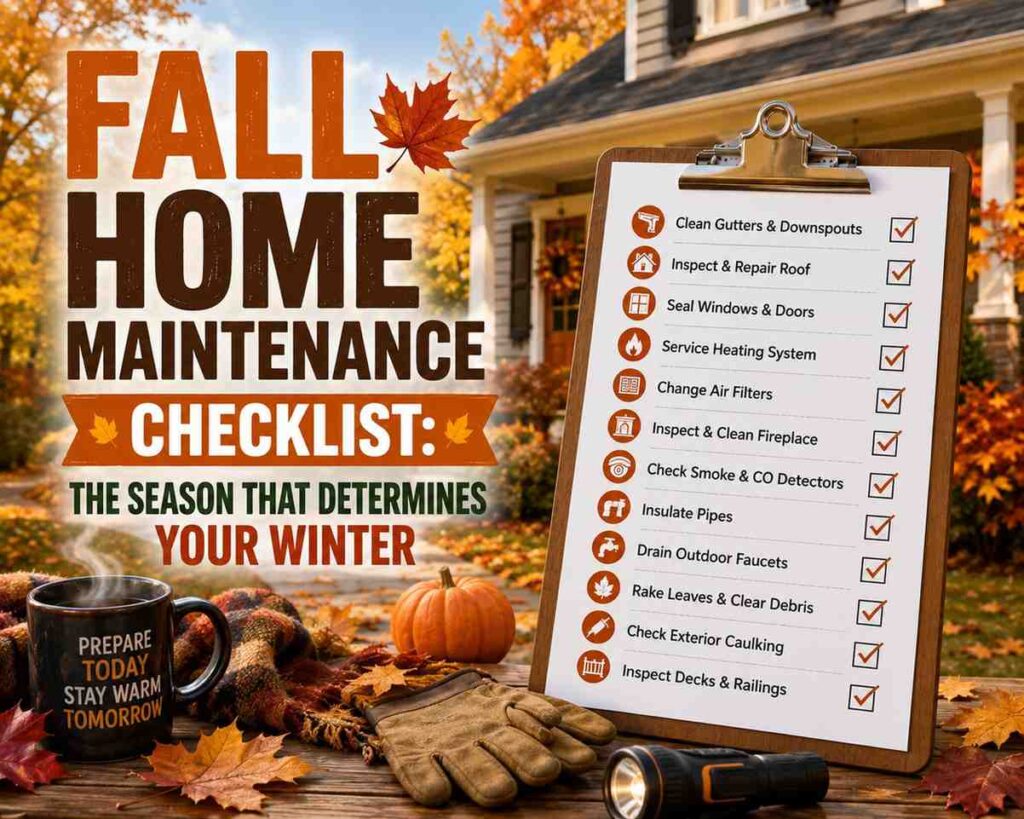
Summer on a home maintenance checklist is about two things: keeping your cooling system running efficiently and protecting your home from heat and moisture damage.
Your air conditioner is working harder than at any other point in the year. Keep it efficient by cleaning or replacing the filter every thirty days during peak summer use. Clear any debris from around the outdoor condenser unit and make sure nothing is blocking the airflow. A dirty or obstructed AC unit does not just cost more to run. It fails earlier, and it always seems to fail on the hottest day of the year.
Check your attic ventilation. A poorly ventilated attic in summer can reach temperatures above 150 degrees Fahrenheit, which accelerates shingle deterioration from the inside and dramatically increases cooling costs. If your attic feels like a sauna when you open the hatch, you have a problem worth addressing.
Inspect your deck or patio. Summer sun and moisture are hard on wood. Look for soft spots, loose boards, wobbly railings, and any fasteners that have started to rust or pop up. A deck that looks fine in spring can become a safety hazard by fall if the wood has been quietly rotting underneath.
Outdoors, this is the time to trim trees and shrubs away from your home. Overhanging branches can damage your roof in a storm and give pests a direct path into your attic. The EPA recommends keeping trees trimmed back at least ten feet from your roof line. Check your driveway and walkways for cracks and seal them before summer heat makes them worse.
Inside, check under every sink for slow leaks. Summer humidity can make small leaks worse and encourages mold growth in cabinet interiors. A slow drip that costs nothing to fix today can cause hundreds of dollars of cabinet and floor damage if ignored for a season.
Fall Home Maintenance Checklist: The Season That Determines Your Winter
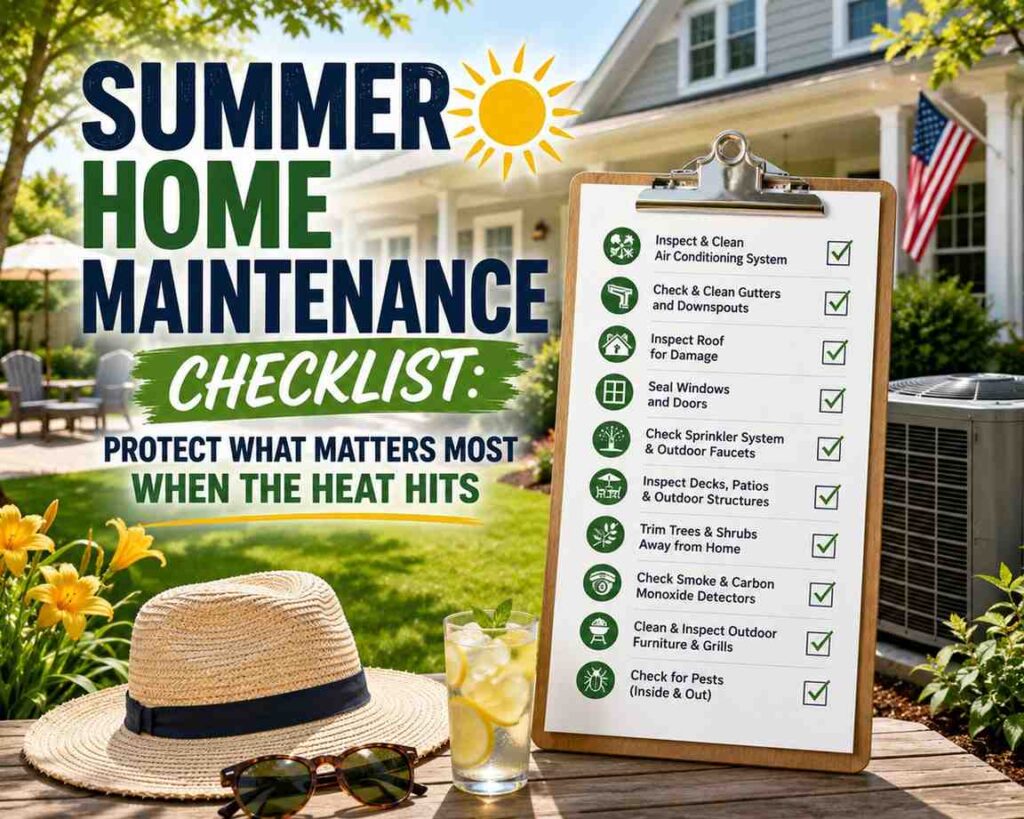
If you only do one round of home maintenance per year, do it in fall. This is the home maintenance checklist season that protects everything. What you do in October and November directly determines how stressful your winter will be.
Start with the heating system. Have your furnace or heat pump professionally serviced before you need it. Replace the filter and test the system on a warm day so you are not discovering problems when the temperature drops to 20 degrees. The U.S. Department of Energy (https://www.energy.gov) estimates that heating accounts for 29 percent of the average American utility bill. A well-maintained heating system is not just comfortable. It is genuinely significant to your monthly costs.
Clean the gutters again. Fall is the second essential gutter cleaning of the year. Wait until most of the leaves have fallen in your area, then clear gutters and downspouts completely. A gutter blocked with wet leaves in late fall will freeze solid in winter, potentially pulling away from the fascia and directing ice melt straight toward your foundation.
Disconnect and drain all outdoor hoses and shut off exterior faucets from inside the home. Water left in outdoor lines freezes, expands, and bursts pipes, sometimes inside your walls where you will not discover the damage until it has been leaking for weeks.
Check your chimney if you have a fireplace. The National Fire Protection Association (https://www.nfpa.org) recommends having chimneys inspected and cleaned at least once per year. Creosote buildup inside a chimney is a leading cause of house fires, and it builds up faster than most people realize.
Inspect and refresh all weatherstripping around doors and windows. If you can feel a draft or see daylight around a closed door, you are losing heat and money every single day of winter. This is a one-hour fix that pays for itself in the first cold month.
Seal any gaps or cracks in your foundation and exterior walls with caulk or expanding foam. Mice and other pests start looking for warm places to overwinter in fall, and they can enter through gaps as small as a dime.
Test your sump pump if you have one by pouring water into the pit and confirming it activates and drains properly. A sump pump failure during spring snowmelt or a winter thaw can flood a basement in hours.
Winter Home Maintenance Checklist: Stay Safe and Stay Ahead
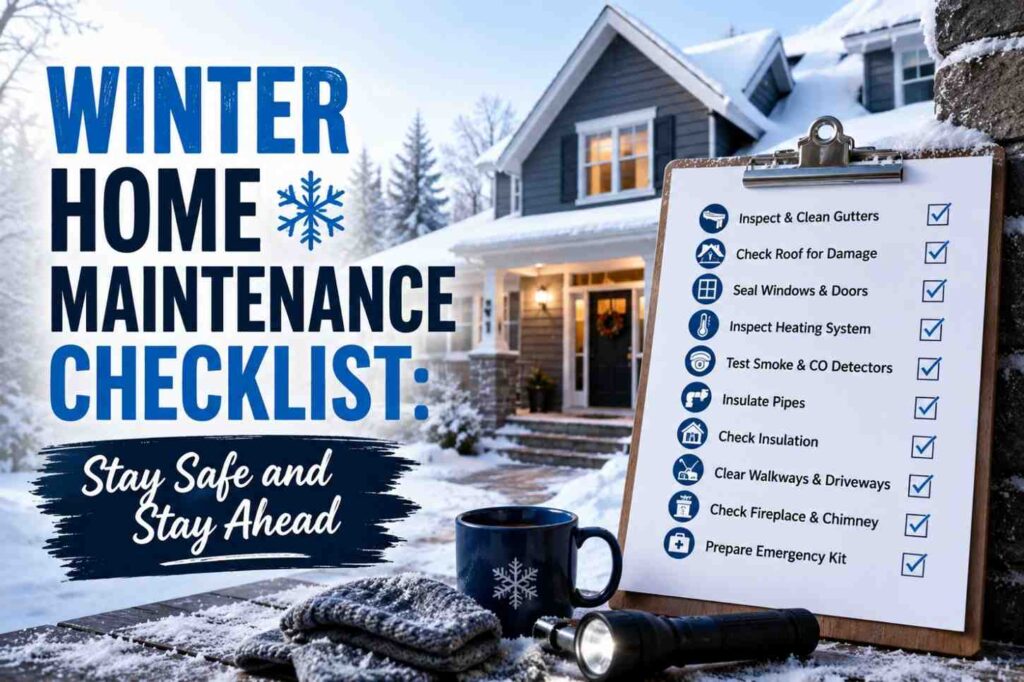
Winter on a home maintenance checklist is less about big projects and more about monitoring and prevention. The heavy lifting happened in fall. Now your job is to stay vigilant.
Know where your main water shut-off valve is and make sure it is easily accessible. If a pipe bursts, every second it takes to find that valve is more water damage. Walk every adult in your household to the location before winter arrives.
On any day where temperatures drop below freezing, let faucets on exterior walls drip slightly to relieve pressure in the pipes. Open cabinet doors under sinks on exterior walls to let warm air circulate. These are small habits that prevent the single most disruptive winter home emergency: burst pipes.
After every significant snowfall, check your roof for ice dams. An ice dam forms when heat from inside the home melts snow near the roof peak, which then refreezes at the colder eaves. Water backs up behind the ice dam and works its way under shingles and into your home. If you see thick ridges of ice at your roof edge or large icicles forming, you have an ice dam situation worth addressing. Proper attic insulation is the long-term fix.
Check your furnace filter monthly in winter and replace it when it looks dirty, regardless of how long it has been in. A clogged filter in winter forces your heating system to work overtime and can trigger a system shutdown when you need it most.
Winter is also the best time to handle indoor projects. Check all caulking in the bathroom and kitchen. Inspect your attic insulation. Test ground fault circuit interrupter outlets in bathrooms and kitchens by pressing the test and reset buttons. Check your fire extinguisher to confirm it is still charged.
Use any dry, mild winter days to walk your property and note anything that needs attention in spring. Keep a running list. By the time the temperature rises, you will be ready to start the cycle again with a clear plan rather than a vague feeling that something needs doing.
The One Habit That Separates Good Homeowners from Great Ones
Every task on this home maintenance checklist is straightforward. None of it is complicated. What separates homeowners who always seem to have a well-running, problem-free home from those who lurch from repair to repair is not skill or money. It is consistency.
Great homeowners treat their home like a relationship. They show up regularly, pay attention, and handle small things before they become big things. A fifteen-minute walk around your property once a season, combined with the seasonal tasks outlined above, is genuinely all it takes.
Bookmark this checklist. Come back to it at the start of every season. Your future self, the one who is not writing a check for an emergency repair on Christmas Eve, will be glad you did.