

You cleaned your home last weekend. You mopped, you dusted, you scrubbed the bathroom until it sparkled. And yet right now, in places you walked past without a second thought, dirt is building up in ways that would genuinely surprise you.
Most people clean what they can see. The problem is that the hidden places in your home that collect dirt are often the ones doing the most damage, to your air quality, to your health, and to the surfaces themselves. These are not obscure corners you would only find in a neglected home. They are spots that exist in virtually every American household, clean or otherwise.
Here are the seven hidden places in your home that collect more dirt than you think, and exactly what to do about each one.
1. Under and Behind Large Appliances
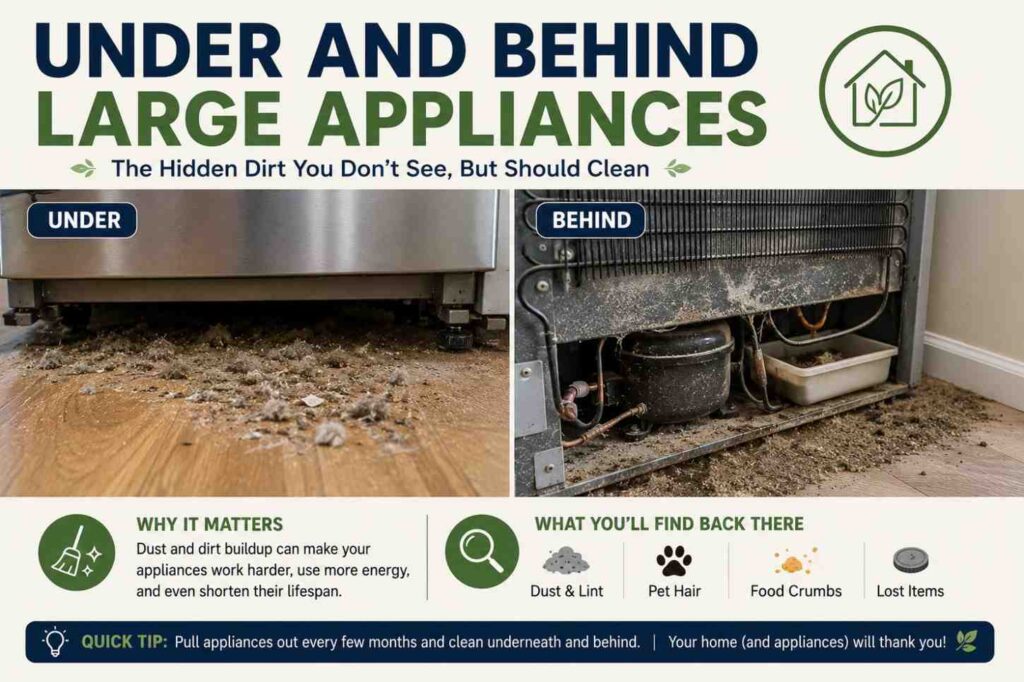
The space under your refrigerator, stove, and washing machine is one of the most significant hidden places in your home that collect dirt and almost nobody ever cleans. What accumulates there is not just dust. It is a dense combination of pet hair, food crumbs, grease particles, lint, and whatever else finds its way to floor level over months and years.
The refrigerator coils at the back of the unit are particularly important. When those coils are coated in dust and debris, the refrigerator has to work significantly harder to maintain its temperature, which shortens its lifespan and raises your energy bill. The U.S. Department of Energy (https://www.energy.gov) estimates that dirty condenser coils can reduce refrigerator efficiency by up to 25 percent.
Under the stove collects grease and food debris that falls through the burner grates, and that combination is genuinely a fire risk if it is never addressed. Under the washing machine collects lint and moisture that create ideal conditions for mold.
How to clean it: Pull each large appliance out from the wall twice a year. Vacuum the coils at the back of the refrigerator with a brush attachment. Sweep and mop the floor underneath all appliances. Wipe down the sides and back panels before pushing them back into place.
2. Inside Your Air Vents and Return Registers
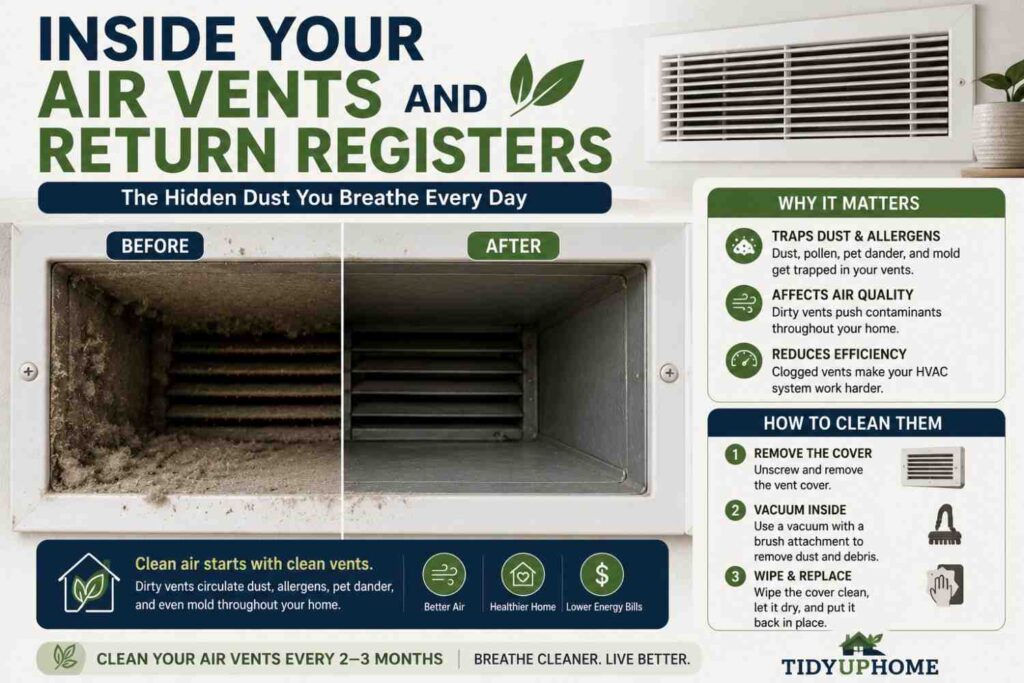
Your HVAC system circulates the air in your home continuously, and the vents and return registers it breathes through are among the most overlooked hidden places in your home that collect dirt. Every particle of dust, pet dander, and airborne debris that travels through your air gets filtered through these vents, and significant amounts of that debris cling to the vent covers and build up inside the ducts over time.
The air quality impact of neglected vents is real. The EPA (https://www.epa.gov/indoor-air-quality-iaq) reports that indoor air can be two to five times more polluted than outdoor air, and dirty HVAC vents are a primary contributor in homes where they are not regularly maintained.
Visually, dusty vent covers are also one of the hidden places in your home that collect dirt in a way that eventually becomes very visible, usually as dark streaks on the wall or ceiling around the vent opening.
How to clean it: Remove the vent covers and wash them with warm soapy water. Use a vacuum with a long hose attachment to pull dust and debris from inside the duct opening as far as the hose can reach. Replace the air filter in your HVAC system every one to three months. Consider having your ducts professionally cleaned every three to five years if anyone in your household has allergies or asthma.
3. The Tracks of Sliding Doors and Windows

Sliding door and window tracks are among the hidden places in your home that collect dirt in the most concentrated way. Because they sit at floor level and channel airflow from outside, they trap dust, dead insects, pollen, moisture, and debris in a narrow groove that almost never gets cleaned during routine sessions.
Open any sliding door in your home right now and look at the track. What you find there, particularly in a home where the sliding door is used regularly, is typically a dense compacted layer of grime that has been building since the last time someone took a toothbrush to it, which for most households is never.
Beyond the aesthetic issue, dirty tracks cause sliding doors and windows to operate less smoothly, accelerate wear on the rollers, and allow moisture to sit in the track and eventually cause rust or mold.
How to clean it: Use a stiff brush or old toothbrush to loosen the debris in the track first, then vacuum it out with a crevice attachment. Follow with a cloth dampened with an all-purpose cleaner to wipe the track completely clean. A thin layer of silicone-based lubricant applied afterward will keep the door sliding smoothly and make future cleanings easier. Do this every three months.
4. The Area Around and Behind Your Toilet

Most people clean the toilet bowl and wipe down the seat and exterior surfaces. Very few people clean the hidden places in your home that collect dirt directly around and behind the toilet, and those areas are among the most bacteria-dense in any bathroom.
The floor around the base of the toilet, particularly the area where the toilet meets the floor, collects splatter, moisture, and bacteria that accumulate in the caulking and grout over time. The wall directly behind the toilet collects residue that splashes upward during flushing. The narrow gap between the toilet tank and the wall is a dust collector that is almost never reached during routine bathroom cleaning.
According to the CDC (https://www.cdc.gov), bathroom surfaces near the toilet can harbor bacteria and pathogens well beyond what is visible to the naked eye. The hidden places in your home that collect dirt are rarely more consequential than the ones directly surrounding your toilet.
How to clean it: Use a disinfectant spray and a narrow brush or old toothbrush to clean the caulking at the base of the toilet. Wipe down the wall directly behind and beside the toilet with a disinfectant cloth. Dust the top of the toilet tank and the gap between the tank and the wall. Do this weekly as part of your regular bathroom clean rather than treating it as an occasional deep clean task.
5. Your Mattress and Box Spring
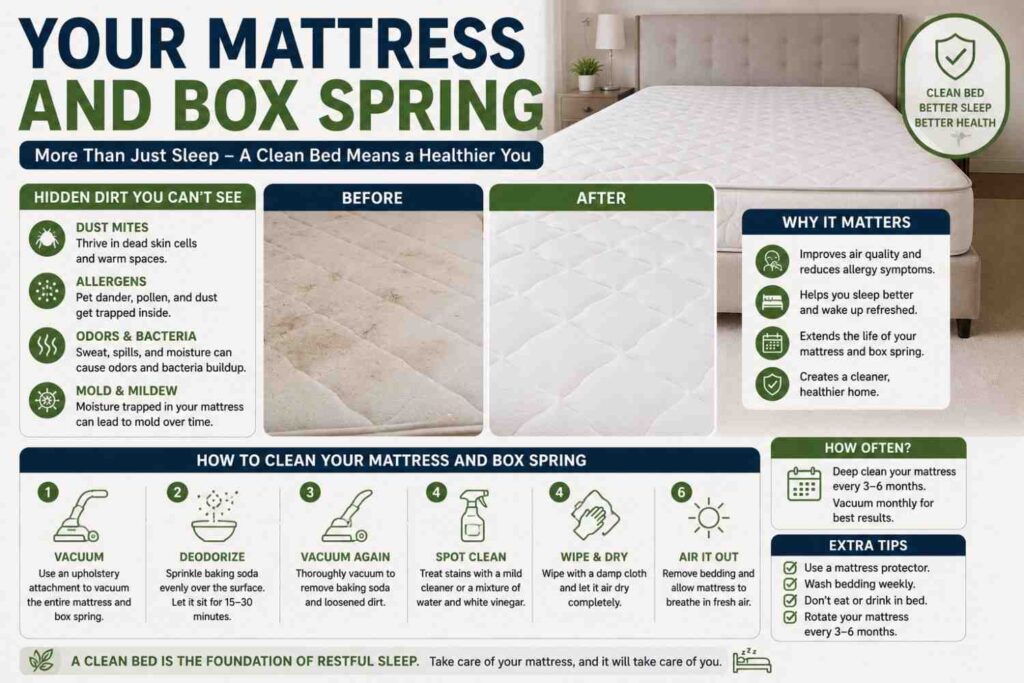
Your mattress is one of the most significant hidden places in your home that collect dirt for the simple reason that you spend approximately a third of your life in it. Over time, mattresses accumulate dead skin cells, dust mites, sweat, body oils, and allergens in amounts that most people find genuinely alarming when they learn about them.
The American Academy of Allergy, Asthma and Immunology (https://www.aaaai.org) identifies dust mites and the debris they leave behind as one of the most common indoor allergen triggers for asthma and allergy sufferers in the United States. Dust mites feed primarily on dead skin cells and thrive in the warm, moist environment of a mattress that is never cleaned.
The box spring beneath the mattress is even more neglected and collects the same debris with even less attention. If your mattress sits on a slatted bed frame, the area between the slats and under the box spring is another hidden place in your home that collects dirt consistently and invisibly.
How to clean it: Strip all bedding and vacuum the mattress surface, sides, and seams using the upholstery attachment on your vacuum. Sprinkle baking soda generously over the surface, leave it for at least thirty minutes, then vacuum thoroughly. Flip or rotate the mattress according to the manufacturer’s instructions. Use a mattress protector and wash it monthly. Do a full mattress clean every three to six months.
6. Cabinet Hinges, Handles, and the Space Above Cabinet Doors
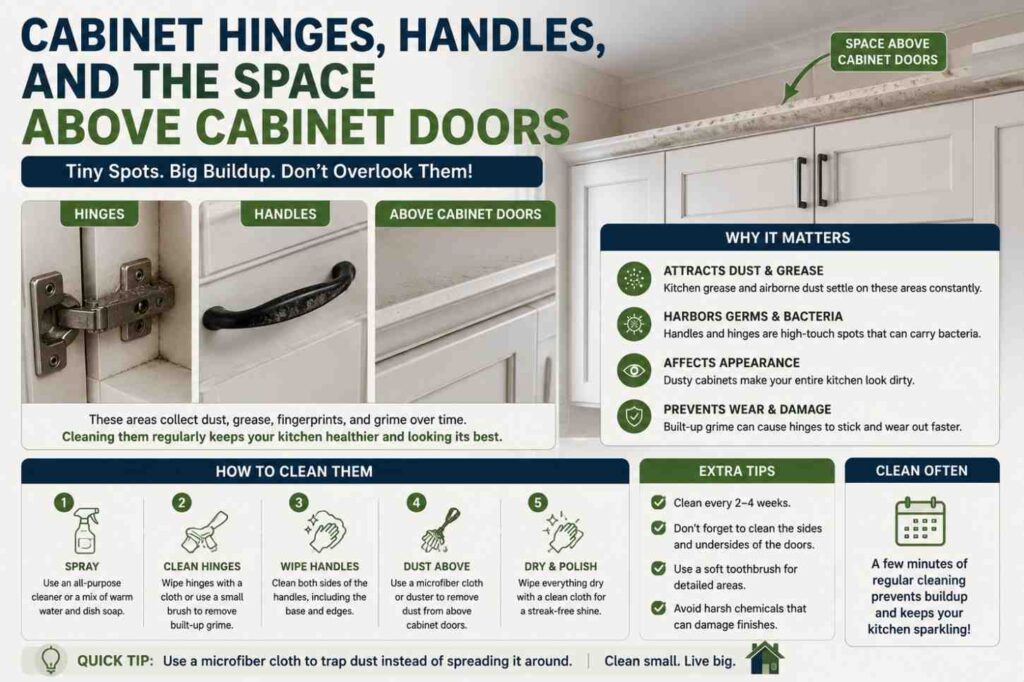
Kitchen and bathroom cabinet hardware is among the hidden places in your home that collect dirt in the most overlooked way. Cabinet handles and pulls are high-touch surfaces touched with food-covered, dirty, or unwashed hands dozens of times every day, and they almost never appear on anyone’s cleaning checklist.
The hinges on cabinet doors collect grease and grime in their joints and crevices, particularly in the kitchen where cooking residue settles on every surface. The narrow ledge on top of each cabinet door frame collects a thin but persistent layer of dust and grease that builds up every time you open the door.
How to clean it: Wipe down all cabinet handles and pulls with a disinfectant cloth weekly. Use an old toothbrush dipped in an all-purpose cleaner to scrub the hinges and the crevices around them. Wipe the top edge of each cabinet door with a damp cloth as part of your monthly kitchen deep clean. For stainless steel hardware, a small amount of mineral oil applied after cleaning will prevent water spots and make future cleaning easier.
7. The Rubber Gasket Around Your Refrigerator Door
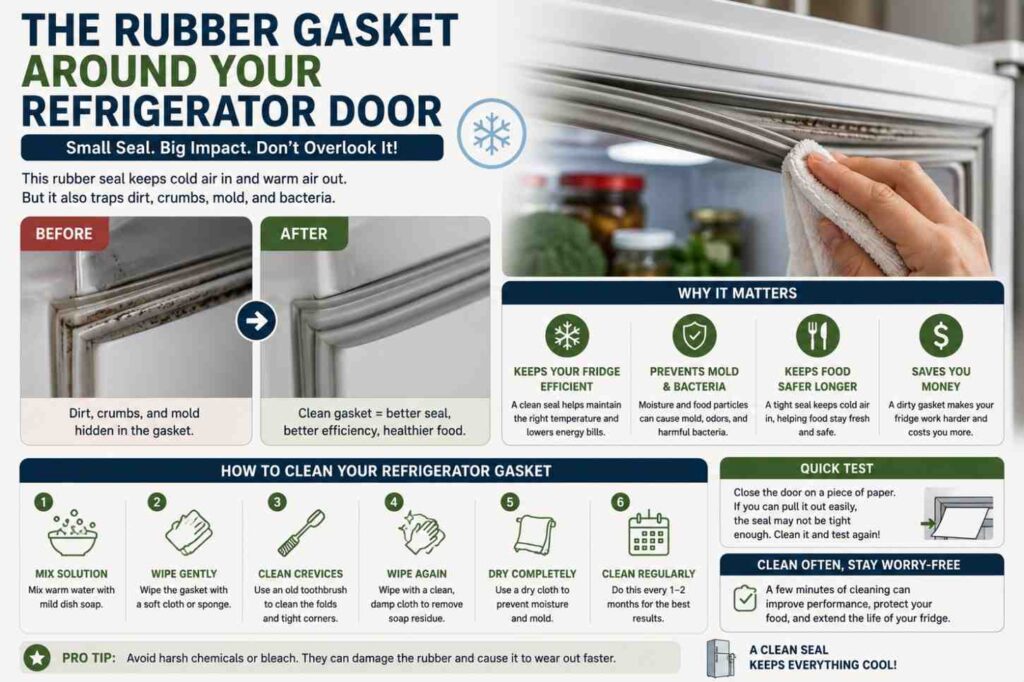
The rubber gasket, which is the flexible seal that runs around the perimeter of your refrigerator door, is one of the most consistently neglected hidden places in your home that collect dirt. Its purpose is to create an airtight seal when the door is closed, but its accordion-like folds create dozens of narrow channels where food residue, moisture, and mold accumulate invisibly.
Pull back the folds of your refrigerator door gasket right now and look inside. In most households that have not specifically cleaned this area, what you will find ranges from accumulated food residue to active mold growth. Because this gasket is in direct contact with the area that stores your food, a moldy gasket is a genuine food safety concern.
A dirty or damaged gasket also reduces the efficiency of the refrigerator seal, allowing cold air to escape and forcing the unit to run longer and use more energy. It is one of those hidden places in your home that collect dirt in a way that affects both your health and your utility bill simultaneously.
How to clean it: Use an old toothbrush dipped in a solution of equal parts white vinegar and water to scrub every fold of the gasket thoroughly. Wipe clean with a damp cloth and dry completely. Check the gasket for any tears or areas where it has separated from the door frame, as a damaged gasket should be replaced. Clean the gasket monthly as part of your kitchen routine.
What These Seven Spots Have in Common
Every single one of the hidden places in your home that collect dirt on this list shares the same characteristic. They are out of your direct line of sight during normal daily life, which means your brain never registers them as needing attention. Regular cleaning habits are built around what we see, and what we do not see gets skipped indefinitely.
The practical solution is simple. Add these seven areas to a rotating cleaning schedule rather than waiting until they become visible problems. Most of them take less than ten minutes to address individually. Knowing where the hidden places in your home that collect dirt are located is the first and most important step, and now you have a complete picture.
A truly clean home is not just about what you can see when you walk in the door. It is about what is happening in the places you never think to look. These seven spots are where the difference between a clean-looking home and a genuinely clean home is made.