

There is a phenomenon that every homeowner experiences but rarely talks about. You live in your home every single day and somewhere along the way you stop seeing it. The smudge on the front door. The smell that hit you the first week you moved in but disappeared by the second. The cobweb in the corner of the ceiling that you keep meaning to get.
Your guests see all of it. The moment someone walks into your home for the first time, or even the first time in a while, they are taking in details that have become completely invisible to you. And they are forming impressions faster than you realize.
This is not about judgment. It is about awareness. These are the ten things guests notice about your home before you do, and once you know what they are, you will never unsee them either.
1. The Smell the Moment They Walk In

Before your guests see a single thing inside your home, they smell it. The scent of a home hits within the first two seconds of walking through the door, and it creates an immediate and powerful impression that colors everything that follows.
The challenge is that you have lost the ability to smell your own home. This is called olfactory adaptation, and it is one of the most well-documented phenomena in sensory psychology. You adapted to your home’s baseline smell weeks after moving in and you have not been able to detect it since. Your guests have not adapted to it at all.
Pet odor, cooking smells that have settled into soft surfaces, musty carpet, and the general lived-in smell of a home are among the first things guests notice about your home and the ones they are least likely to ever mention to you directly.
How to address it: Ask someone you trust to walk in and give you an honest assessment. Ventilate your home regularly by opening windows. Clean soft surfaces like carpets, upholstery, and curtains more frequently than you think necessary. Address the source of any odor rather than masking it with candles or air fresheners, which guests also notice and which signal that something is being covered up.
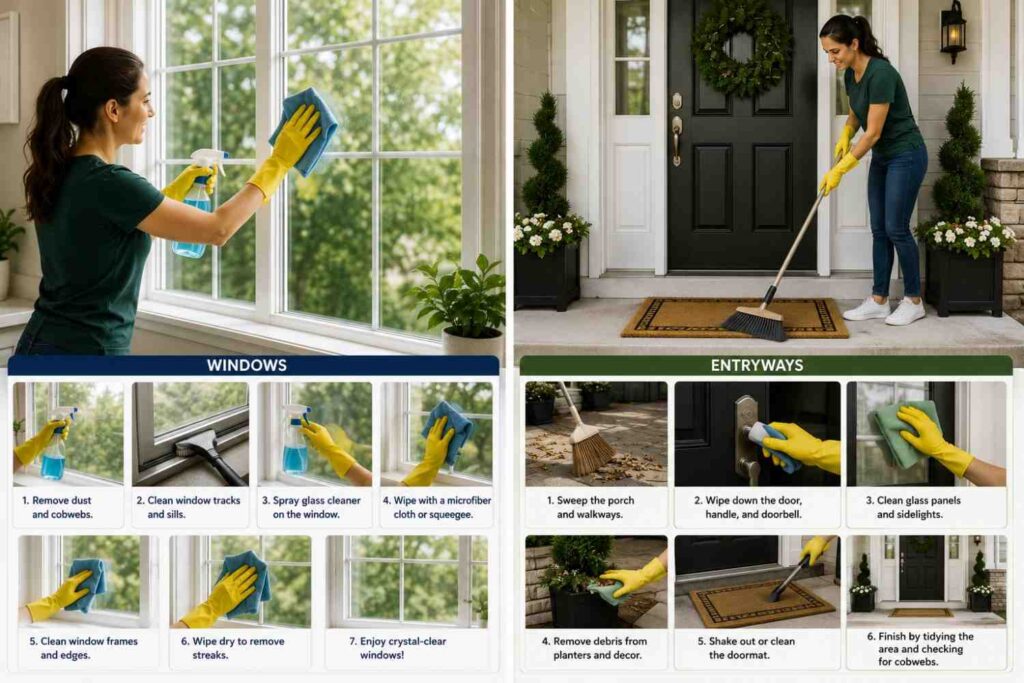
2. The Front Door and Entry Area

The front door is the first visual thing guests notice about your home, and it sets the tone for everything inside. A dirty, scuffed, or faded front door, a doormat that has seen better days, a light fixture full of dead bugs, or a porch that needs sweeping all register immediately and create an impression before a single foot crosses the threshold.
Most homeowners walk past their front door every day without looking at it the way a first-time visitor does. You have stopped seeing the fingerprints on the door handle, the cobweb above the porch light, and the potted plant that has been dead for two months.
How to address it: Wipe down your front door inside and out monthly. Replace the doormat when it starts to look worn. Clean the porch light fixture and replace burned-out bulbs. Sweep the entry area before any gathering. These are small tasks that take less than fifteen minutes and dramatically change the first impression your home makes.
3. The Condition of Your Walls and Baseboards
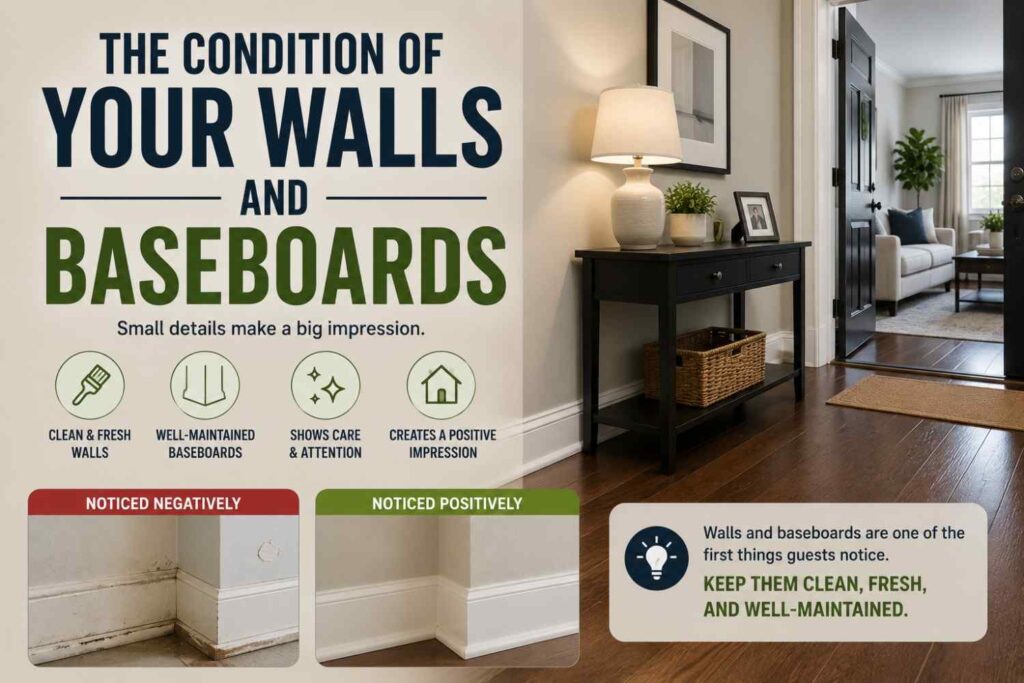
Walls and baseboards are among the things guests notice about your home that residents completely stop seeing. Scuff marks at knee height, fingerprints around light switches, crayon on the wall near the kids’ room, and baseboards with a visible layer of dust and grime are details that fade into the background when you see them every day.
A first-time guest or someone who has not visited in a while sees all of it. Walls and baseboards communicate the overall level of care in a home more than almost any other surface because they are the backdrop of every room and they show their condition clearly in natural light.
How to address it: Walk through your home with fresh eyes every few months and look at the walls and baseboards as if you have never seen them before. A magic eraser handles most scuffs and marks on painted walls without damaging the finish. Wipe baseboards with a damp cloth monthly. Touch up paint in high-traffic areas once a year.
4. Clutter That You Have Learned to See Around
Clutter is one of the most powerful things guests notice about your home because it affects the entire feeling of a space, not just individual surfaces. The stack of mail on the kitchen counter that has been there for two weeks. The shoes by the door that never make it to the closet. The collection of items on the coffee table that has grown so gradually you stopped registering it as clutter at all.
Residents develop what psychologists call clutter blindness, a genuine cognitive phenomenon where the brain filters out familiar visual information. Your guests do not have this filter. They see the clutter immediately and it shapes how the entire home feels to them, even if every surface beneath it is perfectly clean.
How to address it: Before any guests arrive, do a five-minute sweep of every visible surface and remove anything that does not belong. Establish a few designated spots for items that tend to accumulate, a basket for mail, a hook for bags, a tray for keys and everyday items. The goal is not perfection. It is giving every surface a clear purpose.
5. The Kitchen Sink and Countertops
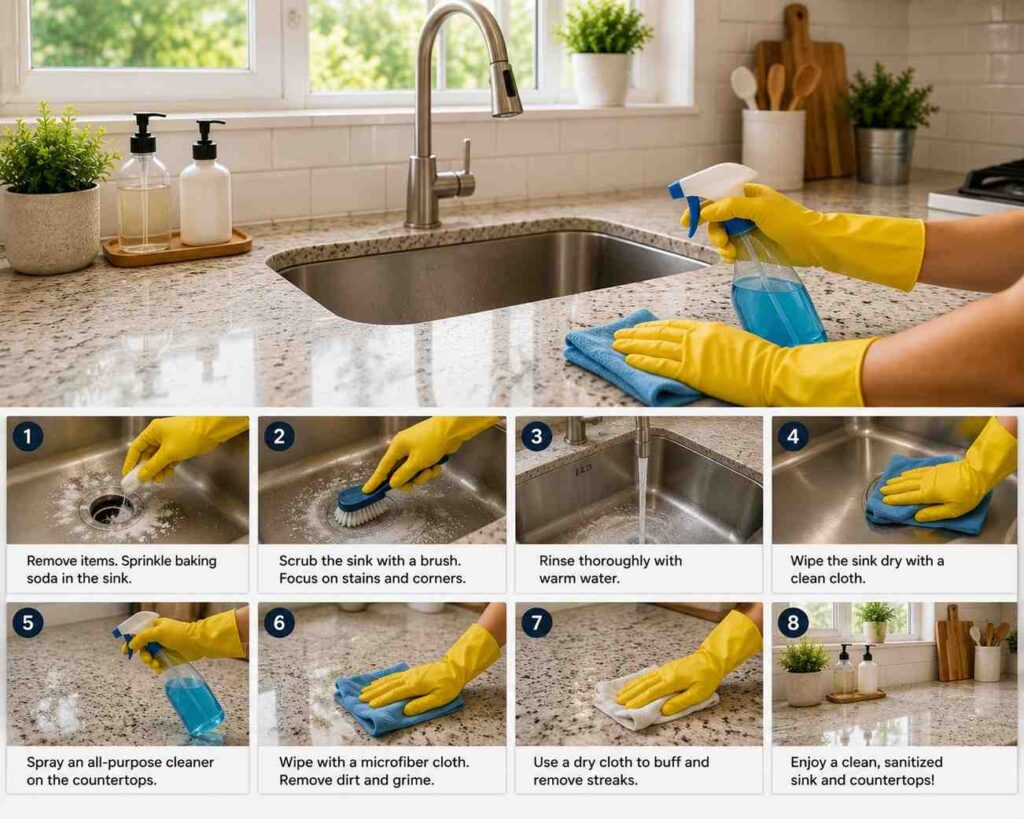
The kitchen is where guests often end up during gatherings, and the sink and countertops are among the first things guests notice about your home in that space. A sink full of dishes, water spots and residue around the faucet, a damp sponge sitting in a puddle on the counter, and stained or cluttered countertops all register quickly and create a strong impression.
The sponge deserves particular mention. A kitchen sponge sitting on the counter is one of those things guests notice about your home that they will never comment on but will absolutely remember. Old sponges carry a distinctive smell and appearance that communicates more than most homeowners realize.
How to address it: Clear and wipe down the countertops before anyone comes over. Clean the sink basin and faucet until they are dry and spot-free. Replace kitchen sponges frequently and store them where they can dry between uses. Keep the visible portion of the counter as clear as possible so the space feels clean and intentional rather than chaotic.
6. Bathroom Cleanliness and Details
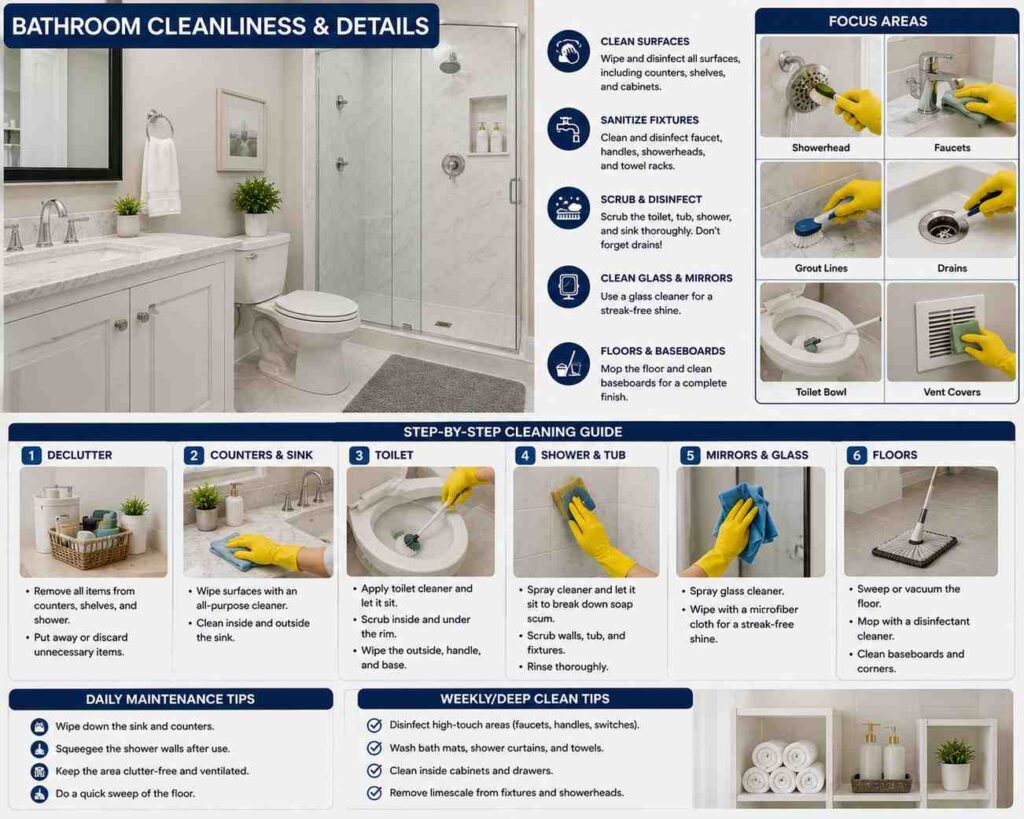
If there is one room in your home where guests form strong and lasting impressions, it is the bathroom. The guest bathroom in particular is scrutinized in a way that no other room is, because guests are alone in it, they have nothing else to look at, and they are often there long enough to notice things they would not register in passing.
Soap scum on the faucet, toothpaste splatter on the mirror, a toilet base that has not been cleaned recently, a hand towel that has been used too many times, and a trash can that needs emptying are all things guests notice about your home in the bathroom that you have stopped seeing entirely.
The mirror is particularly telling. A bathroom mirror with dried water spots and toothpaste dots in natural light shows every mark clearly, and it is directly in the line of sight of anyone using the sink.
How to address it: Before guests arrive, give the bathroom a complete wipe-down including the mirror, faucet, toilet exterior, and floor around the base. Put out a fresh hand towel. Replace the soap if the current bar looks heavily used. Empty the trash can. These details take ten minutes and the difference they make to a guest’s impression is significant.
7. Pet Hair and Pet Presence
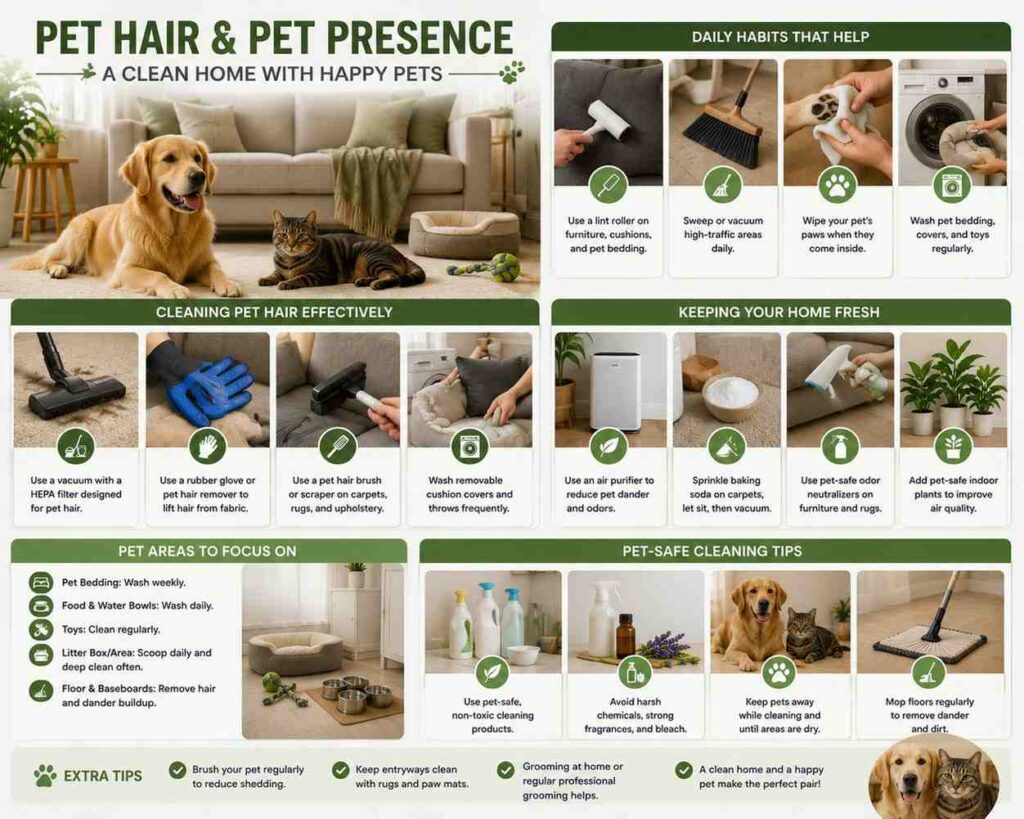
Pet owners are almost universally unaware of how much pet hair exists in their home because they live with it constantly and their brain has filtered it out entirely. Pet hair on the sofa, on rugs, on the back of chairs, and floating in the air in certain light conditions is one of the most immediately noticeable things guests notice about your home when they do not have pets of their own.
Beyond the visual, pet-owning homes often have a distinct smell that residents have completely adapted to and guests detect the moment they walk in. This connects back to the first point on this list, but it is worth addressing separately because the visual and olfactory aspects of pet presence in a home operate independently and each deserves attention.
How to address it: Vacuum upholstered furniture and rugs with a pet hair attachment before guests arrive. Use a lint roller on sofa cushions and any soft surfaces where guests will sit. Wash pet bedding regularly. Place pet items like food bowls and toys in a designated area rather than throughout the living space. The goal is not to pretend you do not have pets. It is to manage their presence so it does not overwhelm the space.
8. Windows and Natural Light
Clean windows versus dirty windows in natural light is one of the most dramatic visual differences in any home, and it is one of those things guests notice about your home that affects the entire feeling of a room without them necessarily being able to identify why. Dirty windows make natural light look dim and slightly yellow. Clean windows make rooms feel brighter, larger, and more inviting.
Fingerprints, smudges, water spots from sprinklers, and the general film that accumulates on exterior glass over months all reduce the quality of light in a room in ways that are difficult to articulate but immediately perceivable.
How to address it: Clean your windows inside and out twice a year. Use a mix of equal parts white vinegar and water with a lint-free microfiber cloth for a streak-free result. Wipe down window sills and tracks at the same time. The difference in how your rooms feel after clean windows is something you will notice yourself, not just your guests.
9. Light Fixtures and Burned-Out Bulbs
Dead bulbs in a multi-bulb fixture, dusty lampshades, and overhead lights with visible dead insects inside the globe are things guests notice about your home that communicate a lack of attention to detail in a subtle but persistent way. Lighting shapes how a space feels, and fixtures that are not maintained affect the atmosphere of a room even when every other element is perfectly done.
Dusty lampshades in particular are among the things guests notice about your home because they are at eye level, easy to spot, and surprisingly common in homes where they have not been cleaned in months or years.
How to address it: Check every light fixture and replace any dead bulbs before guests come over. Wipe down lampshades with a lint roller or a slightly damp cloth. Clean glass globe fixtures and ceiling fan light covers by removing them and washing with warm soapy water. This takes less than thirty minutes for an entire home and the improvement in how every room feels is immediate.
10. How the Home Feels Overall
The last of the things guests notice about your home is harder to quantify but may be the most powerful of all. Beyond the specific details, guests form an overall impression of how your home feels. Whether it feels cared for or neglected. Whether it feels welcoming or chaotic. Whether walking into it is comfortable or slightly tense.
This overall feeling is the sum of all the details above and a few that cannot be itemized, the way furniture is arranged, whether the temperature is comfortable, how the light falls, whether the space feels like it was thought about or simply accumulated over time.
The homes that make guests feel immediately comfortable and impressed are rarely the most expensive or the most perfectly decorated. They are the ones where it is clear that someone pays attention. Where things are maintained. Where the details have not been let go because they stopped being visible.
That is the standard worth aiming for. Not perfection. Attention.
And now that you know the ten things guests notice about your home before you do, you have everything you need to see your home the way they do, and make sure what they see is exactly what you intend.