
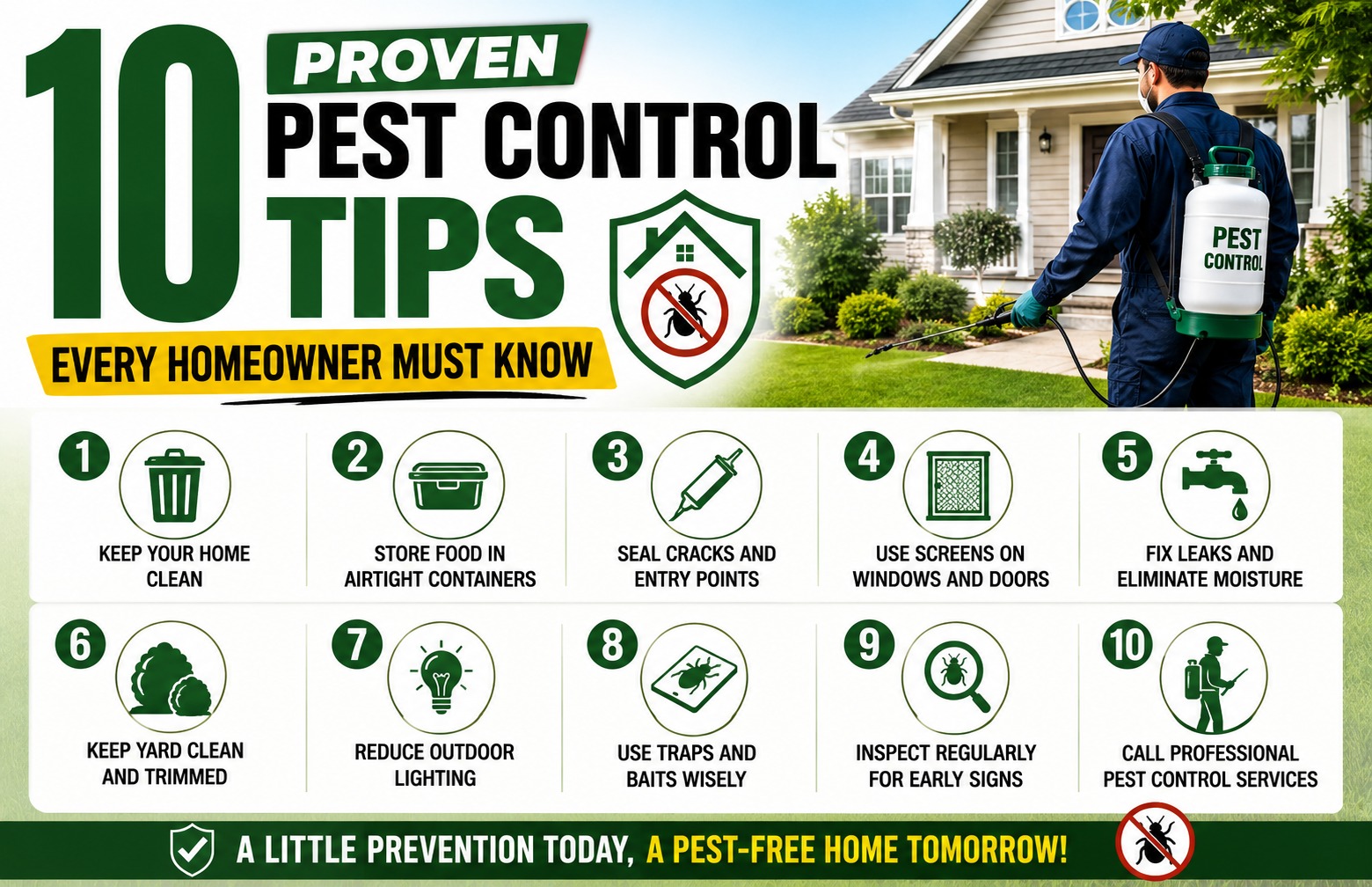
If you have ever had to deal with a pest problem at home, you already know how quickly it can go from bad to worse. One cockroach in the kitchen turns into dozens within days. A few ants near the window become a full trail by the end of the week. Pest control is not something most people think about until they are already dealing with an infestation, and by then, it is much harder to handle.
The truth is, proper pest control starts long before you see a single bug. It is about creating habits and conditions in your home that make it impossible for pests to survive. At TidyUpHome, we believe that every homeowner deserves a clean and pest-free home, which is why we have put together these 10 practical pest control tips that are easy to follow and actually work.
Whether you are a first-time homeowner or have been living in your house for years, these pest control strategies will help you protect your home, your family, and your peace of mind throughout the year.
1. Keep Your Kitchen Clean Every Single Day

The kitchen is where most pest control problems begin. Cockroaches, ants, flies, and rodents are all attracted to the same thing: food and moisture. A kitchen that has crumbs on the counter, open food packets in the cupboard, or a pile of dirty dishes in the sink is practically inviting pests in.
Effective pest control in the kitchen starts with daily cleaning habits. Wipe down your counters and stovetop every evening. Store grains, sugar, and cereals in airtight containers. Do not leave food out overnight and always clean under the fridge and oven regularly since these are the spots pests love the most. A clean kitchen is the foundation of good pest control at home.
2. Fix Leaky Pipes and Eliminate Moisture
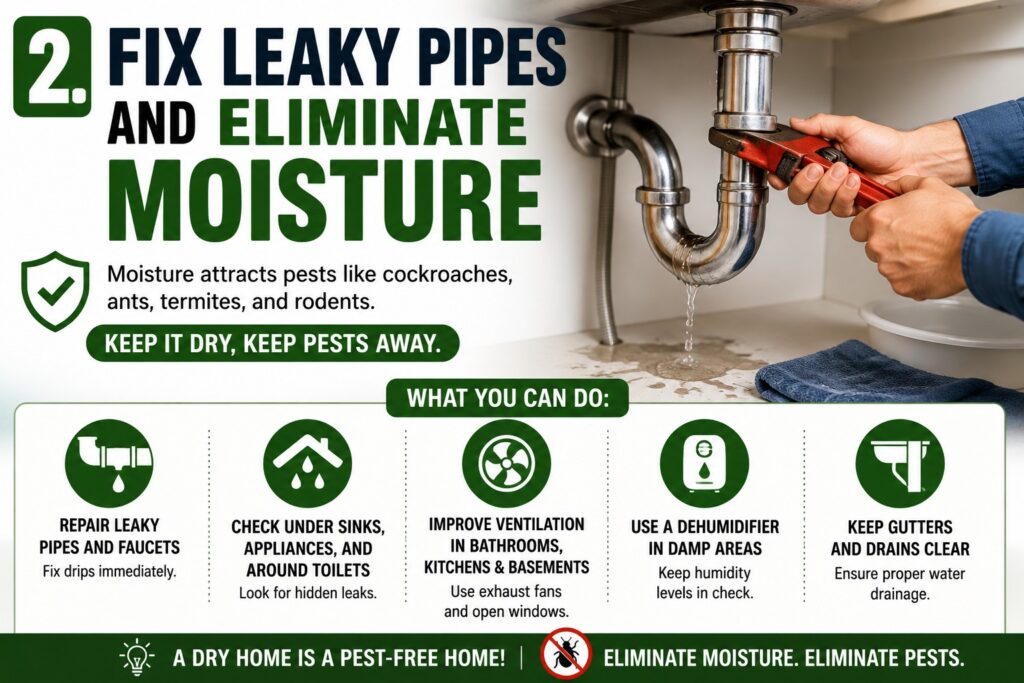
Water attracts pests just as much as food does. Cockroaches can survive for weeks without food but cannot last long without water. Mosquitoes breed in standing water. Rodents are drawn to damp, dark areas under sinks and behind walls. If you are serious about pest control in your home, eliminating moisture problems is non-negotiable.
Check your home regularly for leaking taps, dripping pipes, and damp areas under sinks or in the bathroom. Fix any leaks as soon as you find them. Use a bathroom exhaust fan after showers and avoid leaving water sitting in buckets, plant saucers, or outdoor containers. Controlling moisture is one of the most overlooked aspects of home pest control, yet one of the most effective.
3. Seal All Entry Points Around Your Home
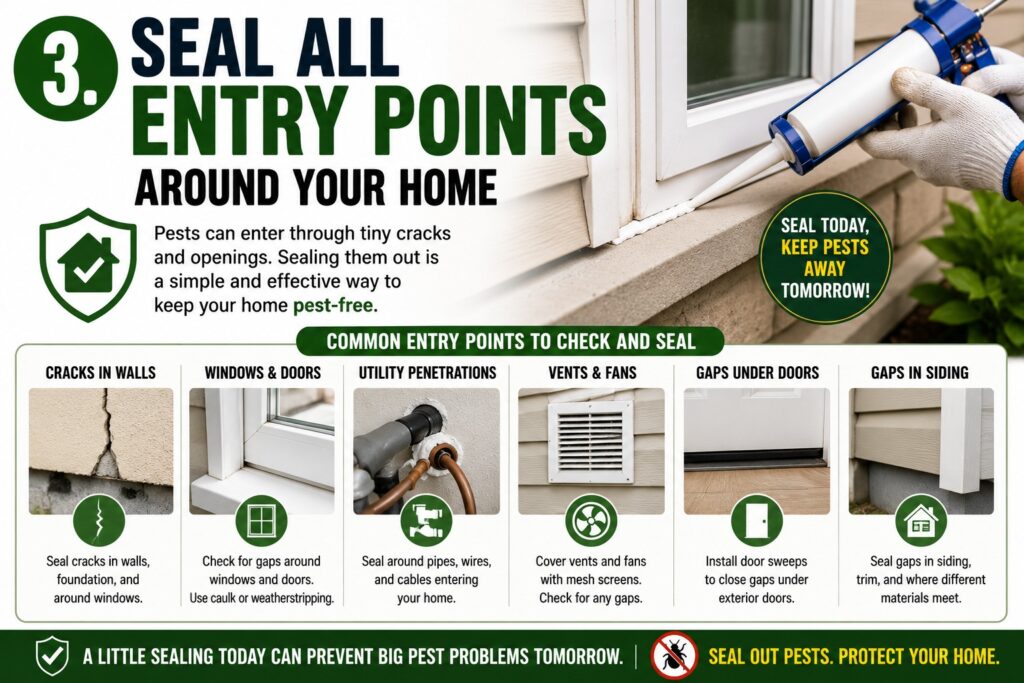
The best pest control strategy is preventing pests from getting inside in the first place. Pests do not need large openings to enter your home. Cockroaches can squeeze through a gap just a few millimeters wide. Mice can fit through a hole the size of a small coin. Even the tiniest crack in your wall or floor is an open door for insects and rodents.
Walk around your home and look for gaps around pipes, cracks near the foundation, broken window screens, and spaces under exterior doors. Fill wall cracks with silicone caulk, install door sweeps on all external doors, and repair or replace any damaged window screens. This kind of preventive pest control takes just a few hours but can protect your home for years.
4. Manage Your Garbage Properly
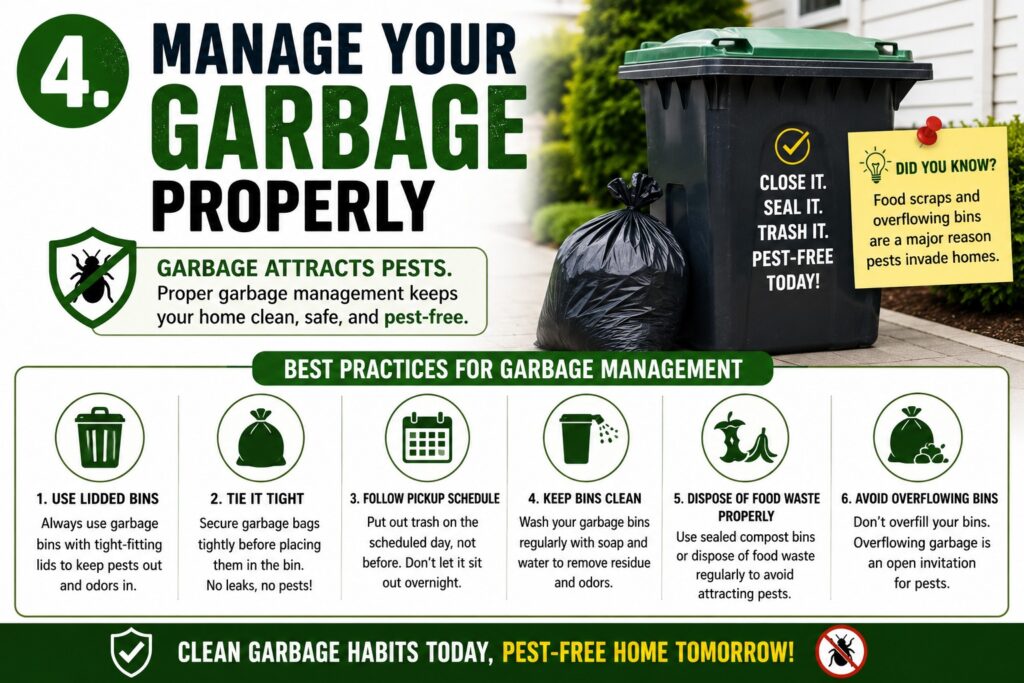
Improper garbage disposal is one of the leading causes of pest control issues in residential homes. Food waste left in open bins attracts cockroaches, flies, rodents, and other pests within hours, especially during the warmer months of the year.
For effective pest control, always use trash bins that have tight-fitting lids both inside and outside your home. Take out your garbage every day or every other day and never let it overflow. Rinse your bins regularly with soapy water to remove odors and residue that attract pests. If you use an outdoor compost bin, keep it covered and placed at a distance from your home’s walls and windows.
5. Declutter Your Home Regularly
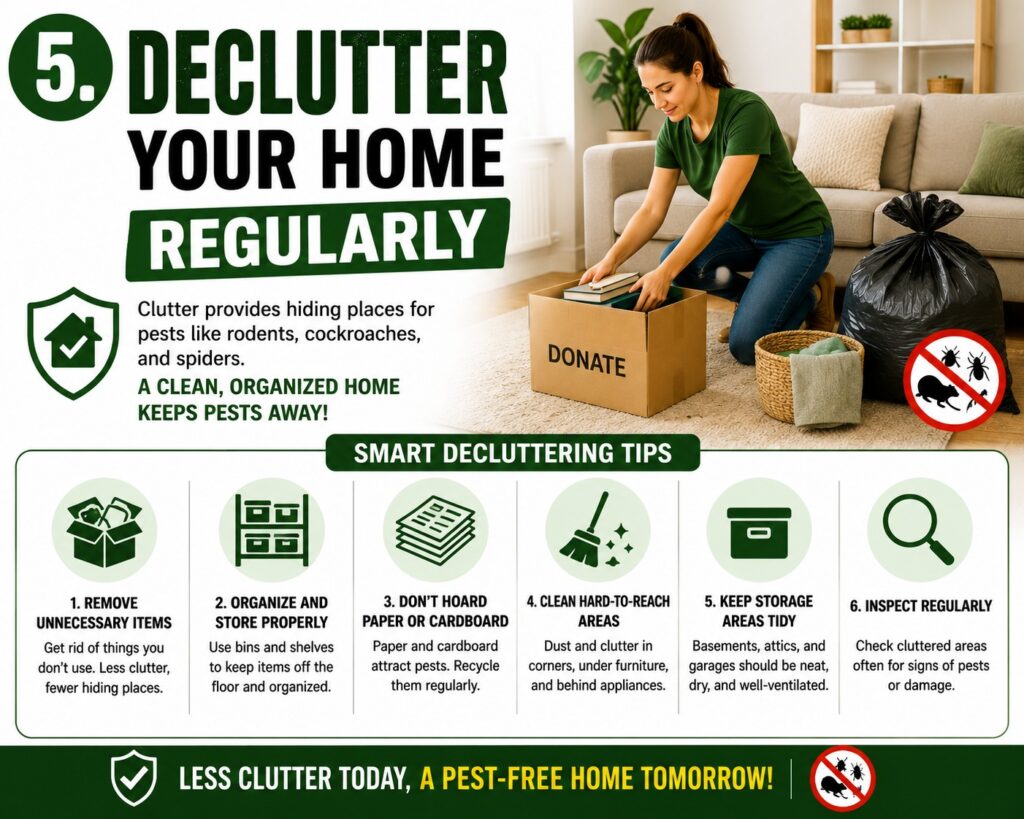
Clutter and pest control do not go well together. Pests thrive in dark, undisturbed spaces where they can hide, breed, and build nests without being noticed. Stacks of old newspapers, unused cardboard boxes in the garage, and crowded storage rooms are some of the most common places where pest problems quietly develop over time.
Make decluttering a regular part of your home pest control routine. Go through your storage areas every few months and get rid of things you no longer need. Replace cardboard boxes with sealed plastic storage bins that pests cannot chew through. The less clutter your home has, the less opportunity pests have to hide and multiply, making all other pest control efforts far more effective.
6. Inspect Secondhand Items Before Bringing Them Inside
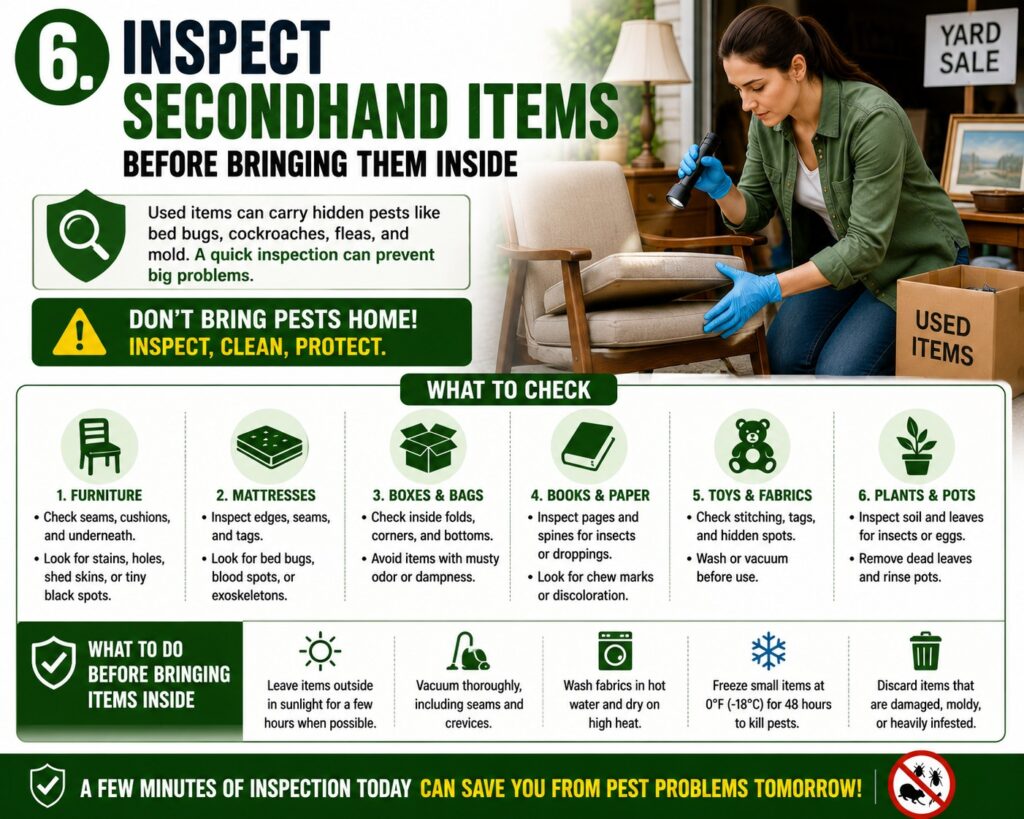
This is a pest control mistake that catches many homeowners completely off guard. Used furniture, mattresses, rugs, and clothing can carry hidden pests like bed bugs, cockroach eggs, or termites that are invisible to the untrained eye. What looks like a perfectly good secondhand find can turn into a serious pest control headache within just a few weeks.
Before bringing any used item into your home, inspect it carefully in bright light. Look for dark stains, tiny eggs, shed skin, or small holes in wood that could indicate a pest problem. For wooden pieces, check for fine powdery sawdust near joints and corners, which is often a sign of wood-boring insects. When you are unsure, leave the item outside in direct sunlight for a day or two before bringing it in.
7. Maintain Your Yard and Outdoor Spaces
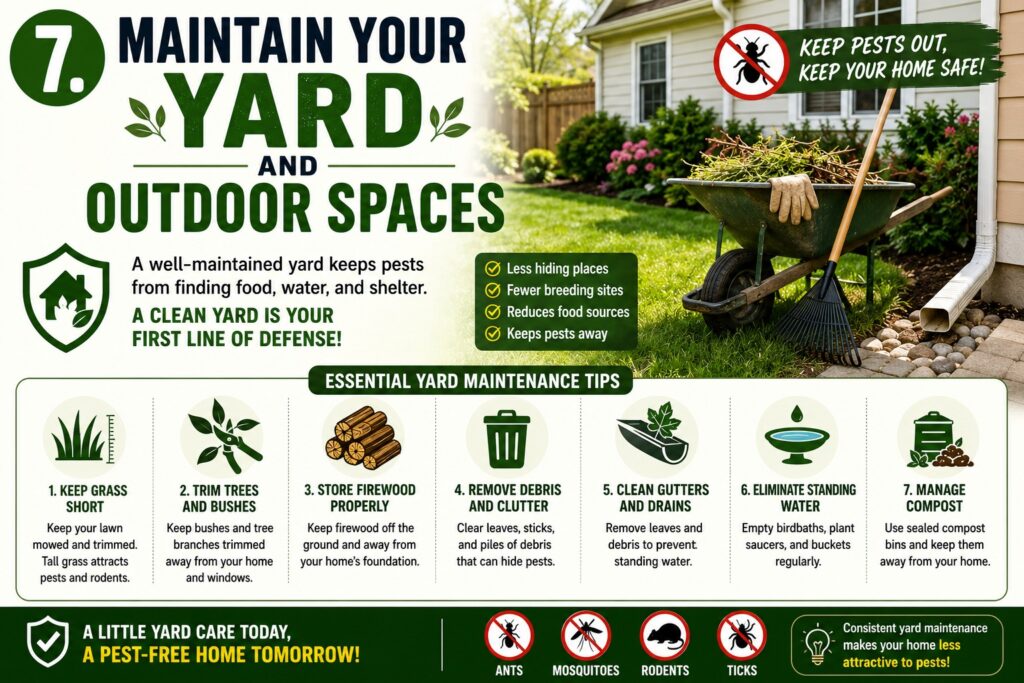
Outdoor pest control is just as important as what you do inside your home. Your garden, lawn, and yard are where most pests originate before they find their way indoors. Overgrown grass, piles of leaves, damp soil close to your foundation, and stacked firewood near the walls are all conditions that support pest populations right outside your door.
Trim your lawn and bushes regularly and clear out any debris or dead plant material. Keep mulch and soil at least a few inches away from your home’s foundation to reduce termite risk. Store firewood off the ground and away from the house. Good outdoor pest control habits create a buffer zone around your home that significantly reduces the chances of pests making it inside.
8. Use Natural Pest Deterrents
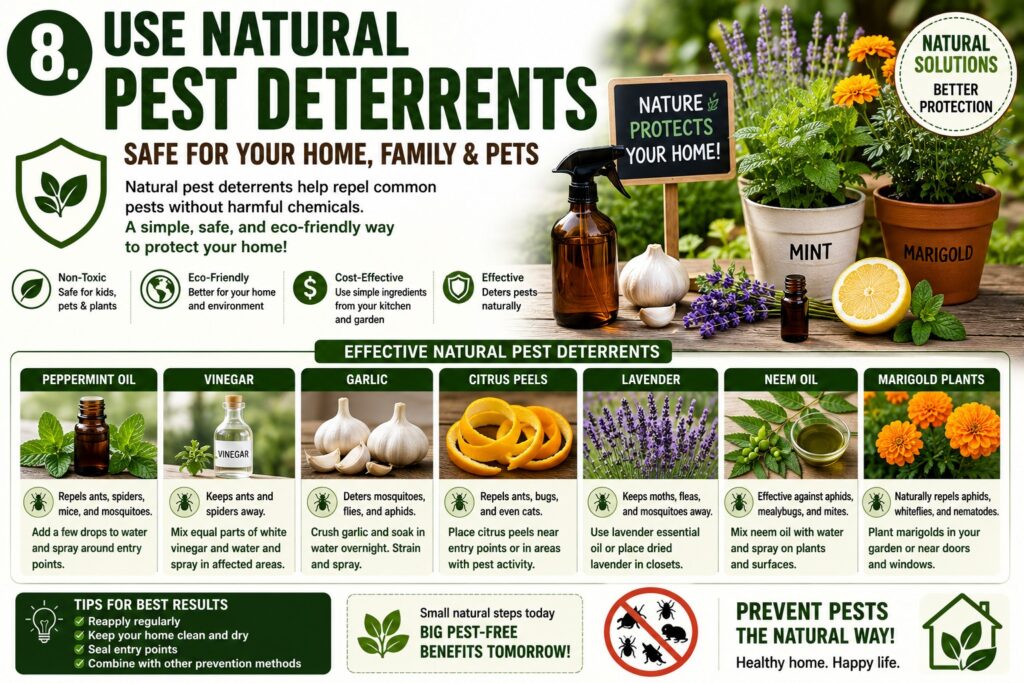
Chemical sprays are not always necessary for effective pest control, especially when you are focused on prevention. Several natural ingredients work very well as deterrents for common household pests. Peppermint oil repels ants and spiders. Bay leaves placed in kitchen cabinets keep cockroaches away. Citronella and lavender are natural mosquito deterrents that are completely safe to use around children and pets.
Adding natural pest control methods to your regular cleaning routine costs very little and has no harmful side effects. Spray diluted peppermint oil around entry points and window sills. Place dried bay leaves inside food cupboards and under the sink. Use citronella candles or diffusers near open windows and outdoor seating areas. These simple additions can make a noticeable difference in keeping your home pest-free naturally.
9. Get a Professional Pest Control Inspection Once a Year
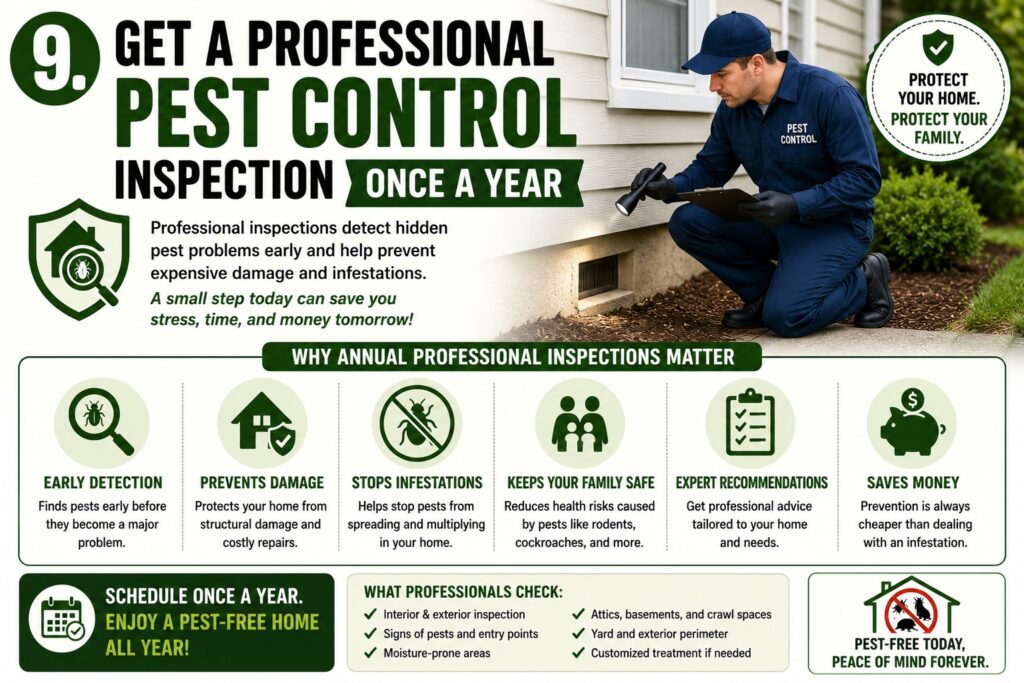
Even if you are doing everything right, a professional pest control inspection once a year is still one of the best investments you can make as a homeowner. Certain pests, particularly termites and rodents, can cause serious structural damage while remaining completely hidden inside walls, floors, and ceilings for months or even years.
A licensed pest control professional has the tools and experience to detect early signs of infestation in areas you would never think to check. They can identify risk factors specific to your home, recommend targeted treatments, and help you build a long-term pest control plan. Catching a problem early through a professional inspection is always far cheaper and less stressful than dealing with a full infestation later.
10. React Immediately When You Spot Warning Signs
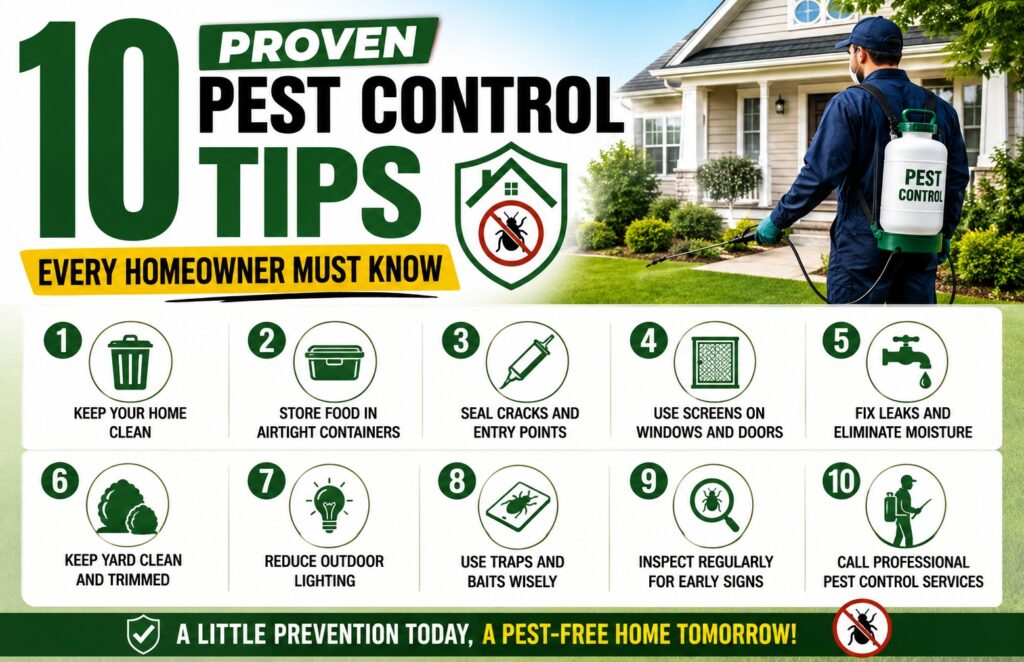
Speed is everything in pest control. The biggest mistake homeowners make is seeing early warning signs and assuming the problem will go away on its own. One mouse usually means many more nearby. One termite wing on your windowsill means a colony could already be inside your walls. Waiting even a week or two can allow a small pest problem to grow into something that requires costly professional treatment.
The moment you notice droppings, chew marks, shed insect skin, mud tubes near your foundation, or actual pests, take action immediately. Set appropriate traps, apply targeted treatments, or call a pest control service right away. The faster you respond, the more manageable the situation will be. Prompt action is the single most important rule in effective home pest control.
Final Thoughts
Pest control is not a one-time task you do when things get bad. It is an ongoing responsibility that comes with owning a home. The good news is that when you stay consistent with these habits, keeping pests away becomes second nature and you rarely have to deal with serious infestations at all.
Start with the basics: keep your home clean, seal entry points, eliminate moisture, and manage your outdoor spaces well. Combine those habits with regular professional pest control inspections and you will have a home that pests simply cannot take hold in. Good pest control protects not just your property but your family’s health and comfort every single day.
For more practical home care guides and tips, visit us at TidyUpHome.com. We are always here to help you keep your home clean, safe, and pest-free.