

Most Americans tidy their homes regularly, but deep cleaning is something that tends to get pushed back week after week until it becomes genuinely overwhelming. The good news is that when you approach it room by room with a clear plan, a deep clean is entirely manageable in a single day or a weekend — and the result is a home that feels completely different to live in. Not just visually cleaner, but genuinely fresher, healthier, and more comfortable.
This guide walks you through exactly how to deep clean every room in your house, what to focus on, what most people forget, and how to do it efficiently without burning yourself out in the first two hours.
Before You Start: The Right Approach Makes All the Difference
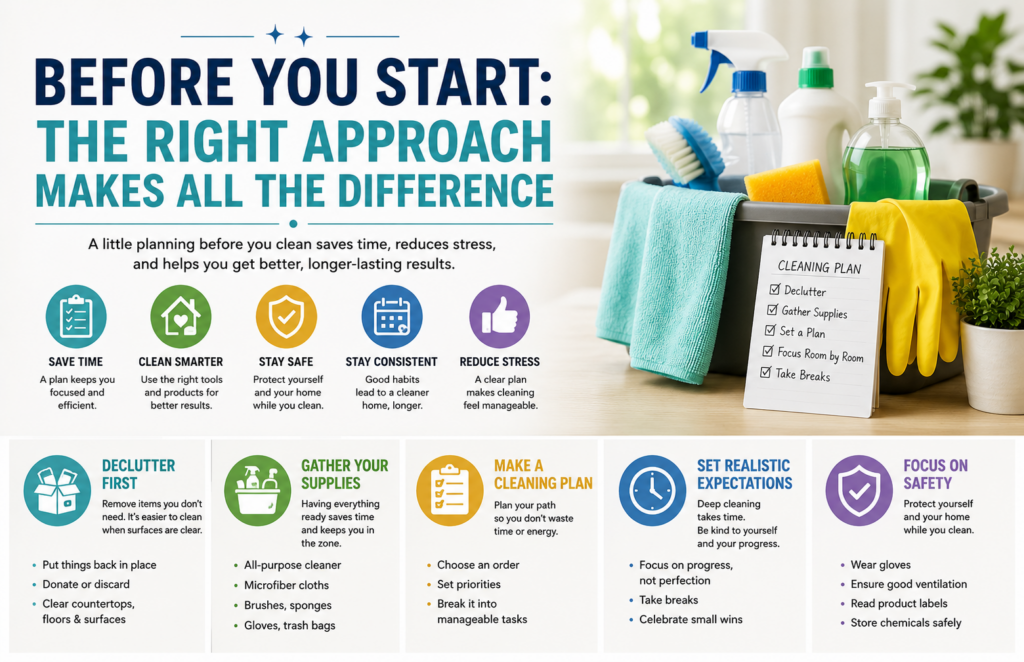
The biggest mistake people make when deep cleaning is starting randomly and losing momentum. They clean one corner of the kitchen, get distracted, move to the bathroom, come back, and by mid-afternoon the house looks more chaotic than when they started. The way to avoid this is to work through one room completely before moving to the next, and within each room, always work from top to bottom.
Starting at the ceiling and working your way down to the floors means that any dust, debris, or cleaning product that falls as you work gets picked up in later steps rather than falling onto surfaces you already cleaned. It sounds obvious when you hear it, but most people instinctively start at eye level and work outward, which means they end up re-cleaning the floors after they dust the shelves.
Before you touch anything, gather everything you need microfiber cloths, an all-purpose cleaner, baking soda, white vinegar, a good scrub brush, your vacuum with attachments, and a mop. Having everything within reach before you start means you are not breaking your rhythm to search for supplies halfway through a room. Put on some music or a podcast, open the windows if the weather allows, and give yourself permission to actually take your time. A rushed deep clean is not really a deep clean at all.
The Kitchen: The Most Time-Consuming Room and the Most Worth It
The kitchen takes the longest to deep clean because it has the most surfaces, the most appliances, and the most accumulated grease and grime. Start at the top literally. Wipe down the tops of your upper cabinets because they collect a layer of sticky, grease-laden dust that most people do not realize is there until they touch it. From there, work your way across the cabinet doors, the backsplash, and the countertops.
The inside of your oven is one of those things that gets ignored for months at a time and then suddenly becomes impossible to overlook. If your oven has a self-cleaning function, run it the night before your deep clean day so it is done by morning. If you are cleaning it manually, a paste of baking soda and water left on the interior surfaces for several hours will break down most of the baked-on grease without the harsh chemical smell of commercial oven cleaners. Wipe it out with a damp cloth and it will look closer to new than you might expect.
Pull your refrigerator and stove away from the wall. This step alone tends to be a humbling experience. The space behind and underneath these appliances collects an extraordinary amount of dust, food debris, and occasionally things that have been lost for months. Vacuum thoroughly back there, wipe down the sides of the appliances, and mop the floor before pushing them back into place.
Empty your refrigerator completely, pull out the shelves and drawers, and wash them in the sink with warm soapy water. Wipe down the interior walls of the fridge with a solution of equal parts water and white vinegar. This cuts through grease and eliminates odors without leaving any chemical residue near your food. While everything is drying, go through what you are putting back in and throw out anything expired or questionable. This is the step that keeps getting delayed, but it takes less than twenty minutes and the fridge feels completely transformed afterward.
Finish the kitchen with the sink. Pour baking soda around the basin, scrub it thoroughly, then pour white vinegar over it and let the fizzing action do its work before rinsing. Run a vinegar solution through your coffee maker if you have one, clean the microwave by microwaving a bowl of water with lemon slices for a few minutes and then wiping the softened grime away with ease, and finish by mopping the floor.
The Bathroom: Where Deep Cleaning Has the Most Visible Impact

Bathrooms are smaller than kitchens but require a different kind of attention. The areas that make the biggest difference are also the ones most people clean least thoroughly the grout between tiles, the base of the toilet, behind and around the toilet, the shower door tracks, and the exhaust fan up on the ceiling.
Start with the exhaust fan because it is dusty and you want that done before you clean anything else. Turn off the power at the circuit breaker if you want to be safe, remove the vent cover, and wash it in soapy water. Use a vacuum attachment or a dry cloth to remove the dust buildup from the fan housing itself. A clean exhaust fan runs more efficiently and removes humidity from the room far more effectively, which matters for preventing mold growth in the long run.
For the shower and tub, spray your cleaner and give it several minutes to work before you start scrubbing. The grout lines are where most of the visible grime accumulates, and a paste of baking soda applied with an old toothbrush is genuinely one of the most effective tools for getting them clean again. For glass shower doors, a mixture of white vinegar and dish soap cuts through soap scum that commercial cleaners often struggle with. The tracks at the bottom of sliding shower doors collect standing water and develop mold stuff them with paper towels soaked in white vinegar and leave them for an hour, then use a toothbrush to scrub them out.
The toilet deserves more attention than it usually gets. Most people clean the bowl and the seat and consider the job done. But the base of the toilet where it meets the floor, the bolts that secure it, the tank, and the area behind the toilet accumulate grime that is easy to miss and genuinely unpleasant if it sits long enough. Clean all of it. It takes five extra minutes and it matters.
Finish by wiping down all surfaces the mirror, the vanity, the light fixtures, and the baseboards before mopping the floor. If you have bathroom rugs, wash them in the laundry while you are cleaning the room so they are fresh when you put them back down.
The Bedroom: More Than Just Changing the Sheets
Most people associate bedroom cleaning with making the bed and maybe vacuuming, but a true deep clean of the bedroom involves things that rarely get done. Start by stripping the bed completely and washing everything sheets, pillowcases, the duvet or comforter, and the mattress cover if you have one. While those are in the wash, flip or rotate your mattress and vacuum it thoroughly on both sides, paying particular attention to the seams and the surface where you sleep. Mattresses accumulate dust mites, dead skin cells, and allergens over time, and vacuuming them regularly makes a real difference in air quality and sleep quality.
Move your furniture and vacuum underneath it. The space under the bed and under the dresser collects an astonishing amount of dust, and that dust circulates through the air in the room while you sleep. Use the narrow attachment on your vacuum to get into the corners and along the baseboards. Wipe down all the furniture surfaces, including the tops of dressers and nightstands, the handles, and the fronts of drawers that get touched constantly but rarely cleaned.
Clean your ceiling fan if you have one this is one of the most commonly skipped steps in any cleaning routine. The blades accumulate a thick layer of dust that gets distributed through the air every time the fan runs. Use a pillowcase slipped over each blade to capture the dust rather than sending it floating down onto your freshly cleaned surfaces.
Living Areas: The Spaces That Show Dirt Gradually

Living rooms and family rooms tend to look reasonably clean most of the time, which is exactly why they often miss out on serious deep cleaning attention. Start by removing all the cushions from your sofa and chairs and vacuuming underneath and inside them. You will find crumbs, coins, remote controls, and possibly things you forgot you owned. Vacuum the cushions themselves and the fabric of the furniture, using the upholstery attachment on your vacuum rather than trying to wipe fabric down with a cloth.
Wipe down all of your electronics the television screen with a dry microfiber cloth, the cable boxes and gaming consoles where dust accumulates in the vents, the remote controls that get handled constantly and almost never cleaned, and the power strips and cords that collect dust along the floor. Move the furniture away from the walls and vacuum along the baseboards, then clean any glass surfaces like coffee tables and picture frames before finishing with the floors.
Curtains and blinds make a significant difference to how a room feels when they are clean. Fabric curtains can usually be washed according to their care labels. Blinds can be wiped with a damp cloth or vacuumed with the brush attachment, working from the top slat down. This is another task that tends to be invisible when it is done right but noticeable when it is long overdue.
Floors Throughout the House: The Final and Most Satisfying Step
After you have worked through each room from top to bottom, the floors are last. Vacuum every floor surface in the house before mopping or doing any wet cleaning, because mopping a floor that has not been properly vacuumed just spreads the dirt around rather than removing it.
For hardwood floors, use a microfiber mop with a cleaning solution designed specifically for wood — never soak hardwood with water as it will warp over time. For tile or vinyl, a warm water solution with a small amount of dish soap works well, though a dedicated floor cleaner will give you a better result on grout lines. For carpet, a good vacuum followed by a carpet cleaner rental a couple of times a year will make a visible difference, particularly in high-traffic areas near doorways and hallways.
Pay attention to the transition areas between rooms and the areas near exterior doors where dirt is tracked in. These spots get significantly more wear than the rest of the floor and benefit from extra attention during a deep clean.
How Often Should You Deep Clean Your House?

Most cleaning professionals recommend a full deep clean two to four times per year for the average American household. Quarterly deep cleans align naturally with the changing seasons a thorough clean in spring, summer, fall, and winter keeps things from getting truly out of hand and means each session is less work than if you were doing it once a year. Families with young children, pets, or members with allergies may benefit from doing it more frequently, particularly in the rooms where they spend the most time.
Between deep cleans, maintaining a consistent weekly routine for the basics vacuuming, wiping kitchen surfaces, cleaning bathrooms, and doing laundry — means your home never gets too far from where it should be. The deep clean is not meant to replace regular maintenance. It is meant to address everything that regular maintenance cannot reach.
People Also Ask
How long does it take to deep clean a house?
For an average-sized American home, a thorough deep clean typically takes between six and ten hours for one person working steadily. A two-bedroom apartment might take four to six hours, while a larger four-bedroom house could take a full day or two shorter sessions spread across a weekend. The time depends heavily on how long it has been since the last deep clean and whether you are doing tasks like washing curtains and cleaning appliances in addition to the standard room-by-room cleaning.
What is the difference between regular cleaning and deep cleaning?
Regular cleaning handles the visible, day-to-day surfaces — wiping counters, cleaning the toilet bowl, vacuuming the main floor areas, and doing dishes. Deep cleaning goes into the areas that regular cleaning does not reach: behind appliances, inside the oven and refrigerator, grout lines in tile, under furniture, inside cabinet doors, ceiling fans, baseboards, and the insides of drawers. Deep cleaning removes the accumulated grime that builds up over time and that regular maintenance cannot address.
What should I clean first when deep cleaning a house?
Always start with the rooms you use most heavily — typically the kitchen and bathrooms — because they require the most time and the most effort. Within each room, start at the ceiling and work downward so that any dust or debris you dislodge falls onto surfaces you have not yet cleaned. Floors should always be the very last thing you do in each room.
What cleaning supplies do I need for a deep clean?
The essentials are microfiber cloths, an all-purpose cleaner, white vinegar, baking soda, a scrub brush, an old toothbrush for grout and tight spaces, dish soap, your vacuum with multiple attachments, and a mop. For specific tasks like the oven you may want a dedicated oven cleaner, and for bathrooms a mold-and-mildew spray is useful. Most deep cleaning, however, can be done effectively with the basics — baking soda and white vinegar together handle more cleaning tasks than most people realize.
How do I deep clean my house fast?
The fastest way to deep clean is to have a clear plan before you start, work room by room without backtracking, and let cleaning products do the work for you by applying them and waiting a few minutes before scrubbing rather than trying to clean dry surfaces. Starting early in the morning, having all your supplies gathered beforehand, and working with a partner if possible can cut the total time significantly. Focus on the kitchen, bathrooms, and floors first since those have the most visible impact.