
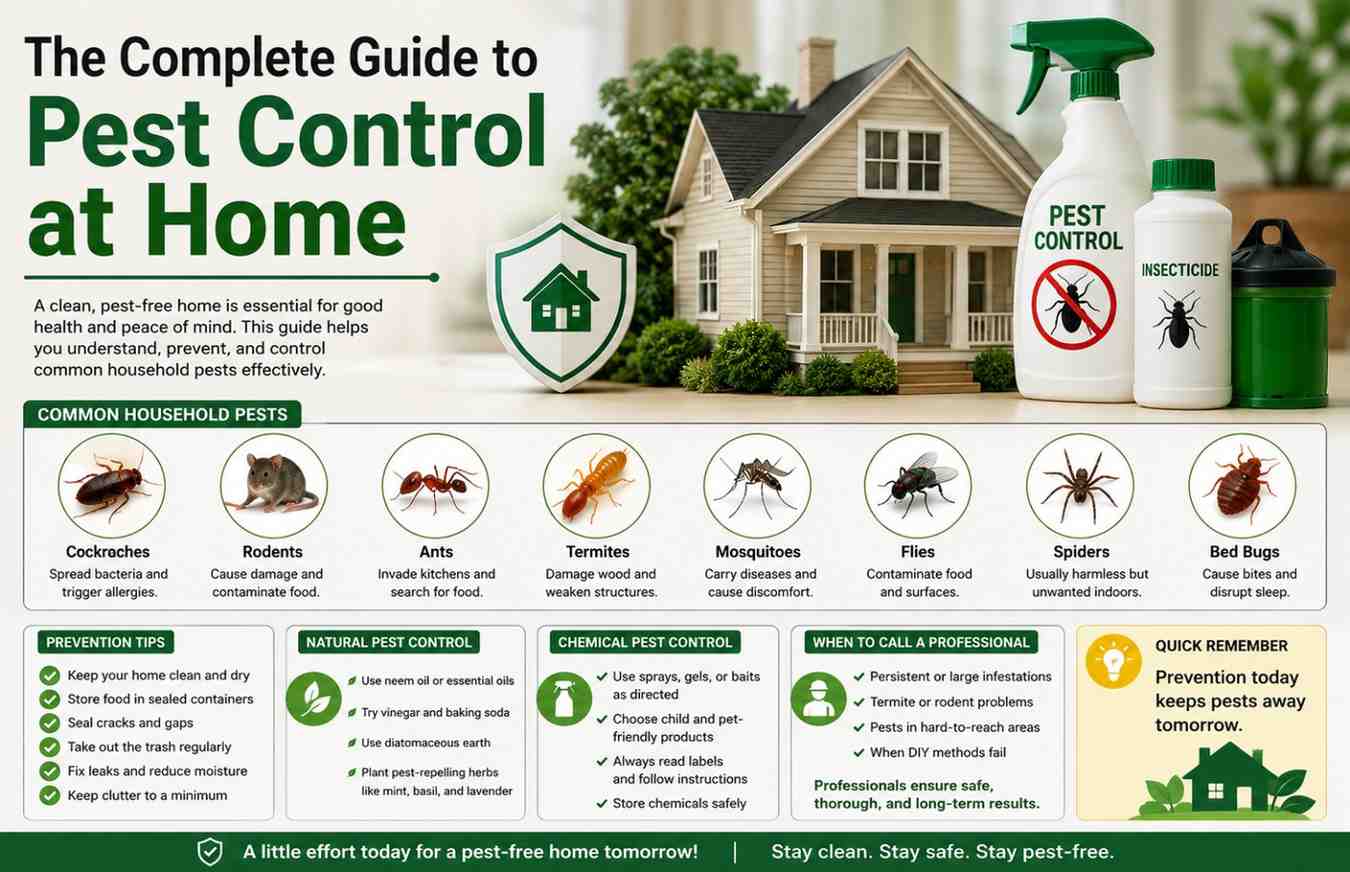
Pests are one of the most common and frustrating problems homeowners face across the United States. Whether you’re dealing with cockroaches in your kitchen, ants invading your pantry, or termites silently destroying your walls, having the right knowledge can save you thousands of dollars in exterminator fees.
In this complete pest control guide, we cover everything you need to know: how to identify common household pests, DIY treatment methods that actually work, when to call a professional, and how to prevent future infestations.
Why Pest Control Matters for Your Home
According to the National Pest Management Association (NPMA), pests cause over $5 billion in property damage in the United States every year. Beyond property damage, many pests carry diseases, contaminate food, and trigger allergies and asthma.
Common problems caused by pests:
- Structural damage (termites, carpenter ants, rodents)
- Food contamination (cockroaches, ants, mice)
- Health risks (mosquitoes, fleas, ticks, bed bugs)
- Electrical damage (rodents chewing wires)
- Psychological stress and sleep disruption
Most Common Household Pests in the USA
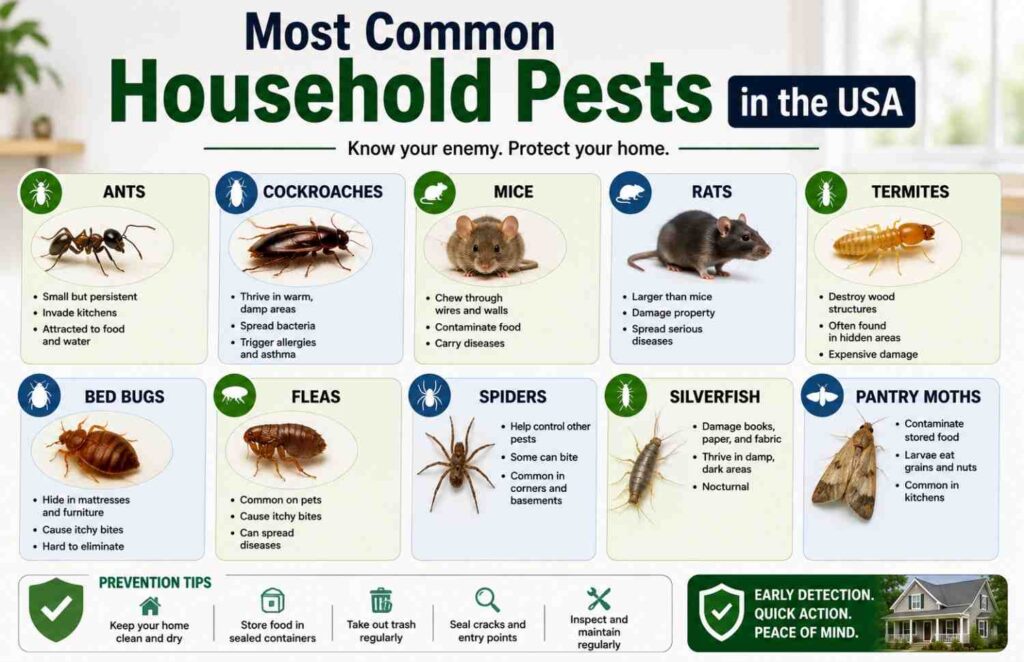
Before you can treat a pest problem, you need to correctly identify the pest. Here are the most common pests found in American homes:
1. Cockroaches
Cockroaches are among the most resilient pests on earth. In the US, the most common species are the German cockroach (most common indoors), American cockroach, Brown-banded cockroach, and Oriental cockroach.
Signs of cockroach infestation:
- Dark, pepper-like droppings near food sources or under sinks
- Musty, oily odor in confined spaces
- Shed skins (cockroach egg casings) in corners
- Seeing roaches during daylight hours (sign of heavy infestation)
DIY Treatment:
- Apply gel bait (Advion or Combat) under sinks, inside cabinets, and behind appliances
- Place boric acid powder along baseboards and in wall voids
- Use IGR (Insect Growth Regulator) spray to stop egg hatching
- Seal all cracks, crevices, and gaps around pipes
2. Ants
Ants are the #1 pest problem in American homes. Common species include Carpenter ants (damage wood), Fire ants (painful sting), Argentine ants, and Odorous house ants.
DIY Treatment:
- Use ant bait stations (Terro liquid bait works best for sugar ants)
- Spray diluted white vinegar along entry points and trails
- Apply food-grade diatomaceous earth around the perimeter of your home
- Caulk and seal all gaps around windows, doors, and utility pipes
3. Bed Bugs
Bed bugs are tiny, reddish-brown insects that feed on human blood at night. They are found in mattresses, box springs, furniture, and wall cracks. Bed bug infestations have increased dramatically in US cities over the past decade.
Signs of bed bugs:
- Red, itchy bites in a line or cluster on skin
- Small blood stains on your sheets or pillowcases
- Dark rusty spots on mattress seams (their excrement)
- Sweet, musty smell in the bedroom
DIY Treatment:
- Wash all bedding and clothes in hot water (130°F or higher)
- Vacuum mattress thoroughly, then encase in a bed bug-proof cover
- Apply diatomaceous earth in cracks, along baseboards, and behind outlets
- Use a bed bug spray (Harris or Eco Defense) on all furniture and walls
4. Termites
Termites cause more than $2 billion in property damage every year in the US. They are often called “silent destroyers” because they work inside walls and wood structures without being noticed for years.
Warning signs:
- Mud tubes on exterior walls or foundation
- Hollow-sounding wood when knocked
- Discarded wings near windows or doors (swarming season)
- Bubbling or uneven paint on walls
Important: Termite infestations are best handled by a licensed pest control professional. DIY treatments can help prevent termites, but active infestations typically require professional treatment.
5. Mice and Rats
Rodents are a serious problem in both urban and suburban homes. They contaminate food, chew electrical wires (causing fire hazards), and carry diseases like Hantavirus and Salmonella.
DIY Treatment:
- Set snap traps along walls and behind appliances (most effective)
- Use peanut butter as bait more effective than cheese
- Seal all entry points larger than 1/4 inch using steel wool and caulk
- Store all food in airtight containers and eliminate water sources
6. Mosquitoes
Mosquitoes are more than just an annoyance they transmit West Nile Virus, Zika, and other serious diseases. They breed in standing water, making prevention critically important.
Prevention and control:
- Eliminate all standing water (birdbaths, flowerpot saucers, clogged gutters)
- Use mosquito dunks (BTI) in water features that cannot be drained
- Install or repair window and door screens
- Use DEET-based or Picaridin repellents when outdoors
Top 10 Pest Prevention Tips for Every Homeowner
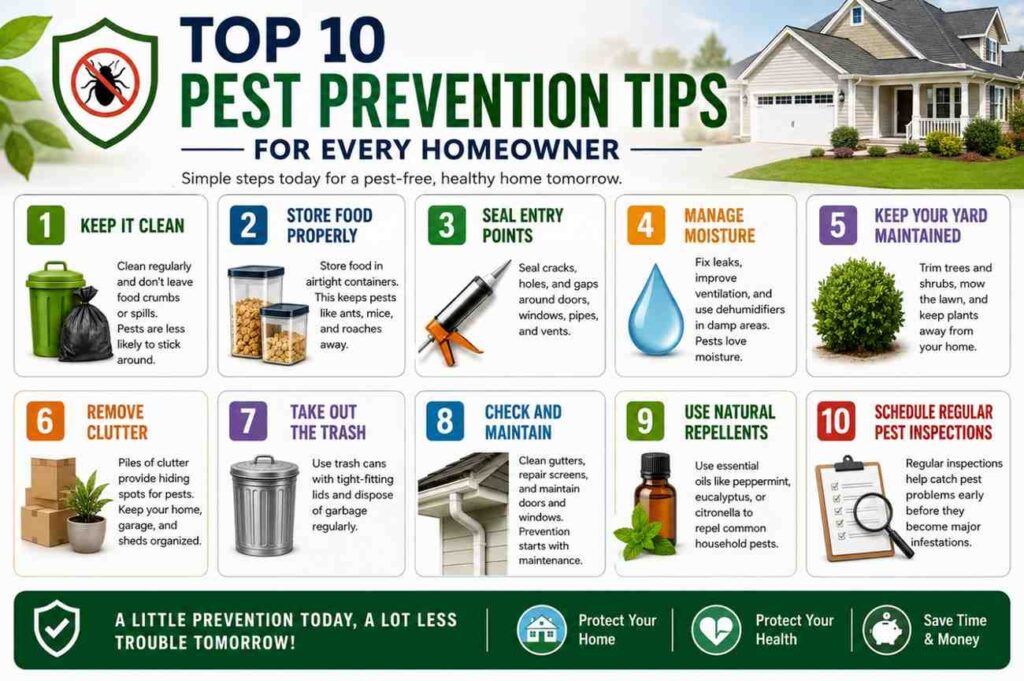
The best pest control strategy is prevention. Here are the most effective ways to keep pests out of your home year-round:
- Seal All Entry Points Check for cracks in your foundation, gaps around pipes, torn screens, and spaces under doors. Use caulk, steel wool, or weatherstripping to seal them.
- Keep Your Kitchen Clean Wipe counters daily, store food in airtight containers, take out trash regularly, and clean under appliances.
- Fix Moisture Problems Repair leaky pipes and faucets. Fix poor drainage around your home’s foundation. Many pests are attracted to moisture.
- Declutter Regularly Piles of cardboard, old newspapers, and clutter provide excellent hiding spots for cockroaches and rodents.
- Maintain Your Yard Keep grass short, trim bushes away from the house, remove leaf piles, and store firewood far from your home.
- Inspect Secondhand Items Always inspect used furniture, clothing, and boxes for bed bugs before bringing them inside.
- Clean Drains Regularly Organic buildup in drains attracts drain flies and cockroaches. Use drain cleaners or enzymatic cleaners monthly.
- Use Door Sweeps Install door sweeps on all exterior doors to prevent rodents, ants, and cockroaches from entering.
- Screen Vents and Chimneys Cover attic vents, crawl space openings, and chimney openings with wire mesh to block entry.
- Schedule Annual Inspections Have a professional pest inspector check your home once a year, especially for termites and wood-destroying insects.
DIY Pest Control vs. Hiring a Professional: Which Is Right for You?
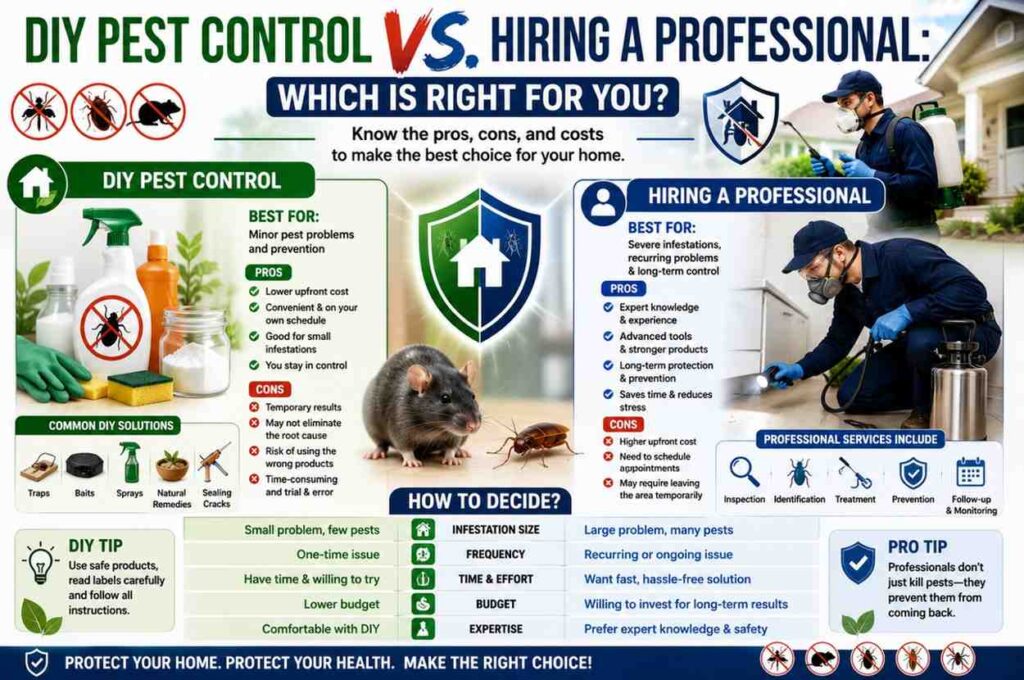
Not every pest problem requires a professional exterminator. Here’s a simple guide to help you decide:
| Pest Type | DIY Possible? | Recommendation |
| Ants (minor) | Yes | DIY first with bait traps |
| Cockroaches (small) | Yes | DIY with gel bait + boric acid |
| Mice (1-2) | Yes | Snap traps + seal entry points |
| Bed Bugs | Partially | DIY for mild; Pro for heavy infestation |
| Termites | No | Always call a professional |
| Wasps/Hornets | Caution | Small nests DIY; large nests = Pro |
| Rats (infestation) | No | Professional required |
| Mosquitoes (yard) | Yes | DIY prevention methods work well |
Natural and Non-Toxic Pest Control Methods
Many homeowners prefer natural pest control methods, especially in homes with children and pets. Here are the most effective natural approaches:
- Diatomaceous Earth (DE): A natural powder that kills insects by damaging their exoskeleton. Safe for humans and pets. Effective against cockroaches, ants, and bed bugs.
- Essential Oils: Peppermint oil repels mice and spiders. Neem oil works against a variety of insects. Mix with water and spray around entry points.
- Boric Acid: A naturally occurring mineral that kills cockroaches, ants, and silverfish. Apply in thin layers in hidden areas.
- Cedar: Cedar chips and cedar oil naturally repel moths, cockroaches, and certain beetles. Great for closets and storage areas.
- Vinegar: White vinegar disrupts ant scent trails and deters many pests. Spray along baseboards and entry points.
Seasonal Pest Control Guide for US Homeowners
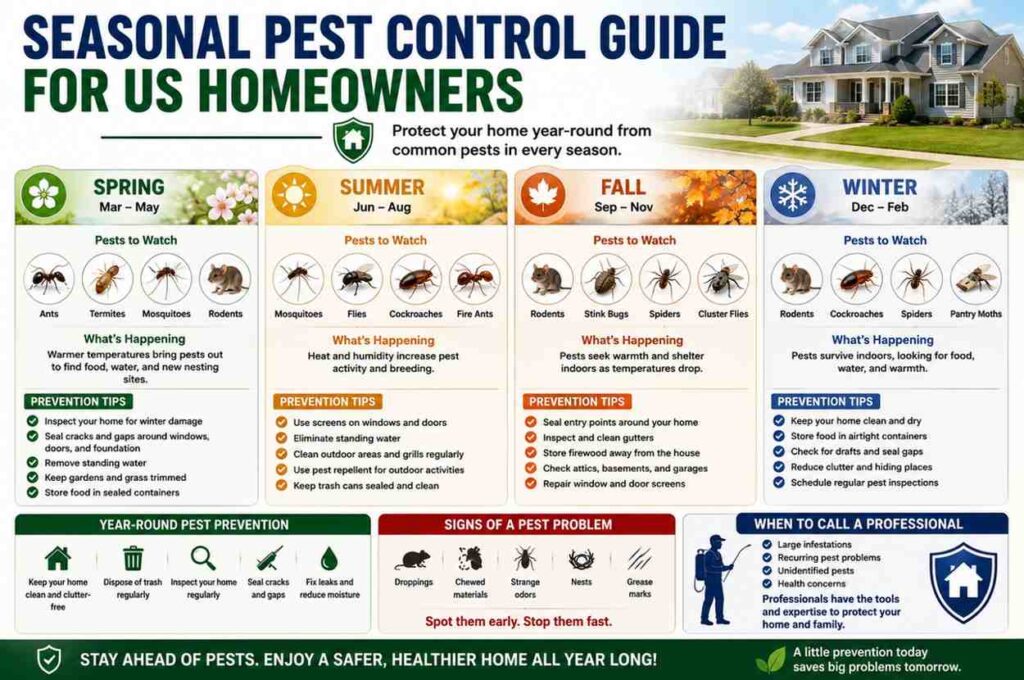
Spring (March – May)
- Inspect foundation for cracks after winter freeze-thaw cycles
- Watch for ant colonies becoming active again
- Termite swarm season begins inspect wood structures
Summer (June – August)
- Peak mosquito season eliminate all standing water weekly
- Wasp and hornet nests grow rapidly monitor and treat early
- Cockroach populations peak keep kitchen spotless
Fall (September – November)
- Mice and rats start seeking warm shelter inside homes
- Stink bugs and box elder bugs look for overwintering spots
- Seal all exterior gaps before temperatures drop
Winter (December – February)
- Rodent activity peaks indoors set traps in attic, basement, and garage
- Cockroaches cluster near heat sources inspect behind refrigerators and ovens
- Check firewood storage never store wood directly against the house
Frequently Asked Questions (FAQ)
Q: What is the most effective pest control method for homes?
A: The most effective approach combines prevention (sealing entry points, eliminating food and water sources) with targeted treatment (gel baits, traps, or sprays specific to the pest). A multi-method approach called Integrated Pest Management (IPM) consistently delivers the best long-term results.
Q: How long does it take to get rid of cockroaches?
A: With consistent treatment using gel bait and boric acid, most cockroach infestations show significant improvement within 1-2 weeks. Complete elimination typically takes 3-6 weeks depending on the severity of the infestation.
Q: Can I do pest control myself or do I need a professional?
A: Many common pests like ants, cockroaches, and mice can be effectively controlled with DIY methods. However, serious infestations and certain pests like termites, bed bugs (heavy infestation), and large rodent colonies typically require professional treatment.
Q: How much does professional pest control cost in the US?
A: The average cost for a one-time pest control treatment ranges from $150-$350. Monthly or quarterly service plans range from $40-$70 per visit. Termite treatments can cost $500-$2,500+ depending on the treatment method and infestation severity.
Q: Is pest control safe for children and pets?
A: Most modern pest control products are safe when used as directed. For extra caution, keep children and pets out of treated areas until dry (usually 30 minutes to 2 hours). Natural alternatives like diatomaceous earth and essential oils are excellent options for households with young children and pets.
Q: What attracts cockroaches to a clean house?
A: Even clean homes can get cockroaches. They are attracted to moisture, warmth, and shelter not just food. Leaky pipes under sinks, humid basements, and wall cracks provide ideal conditions. They can also enter through grocery bags, cardboard boxes, and secondhand appliances.
Conclusion: Take Control of Pests Before They Take Over Your Home
Pest control doesn’t have to be complicated or expensive. With the right knowledge, consistent prevention habits, and targeted treatment methods, most homeowners can successfully manage and eliminate common household pests on their own.
The key is to act quickly at the first sign of an infestation, use the right products for each specific pest, and seal up your home to prevent future problems. For serious infestations especially termites, large rodent colonies, or widespread bed bug infestations don’t hesitate to call a licensed pest control professional.
Explore our in-depth guides for each pest type to get step-by-step instructions, product recommendations, and expert tips specific to your pest problem.