
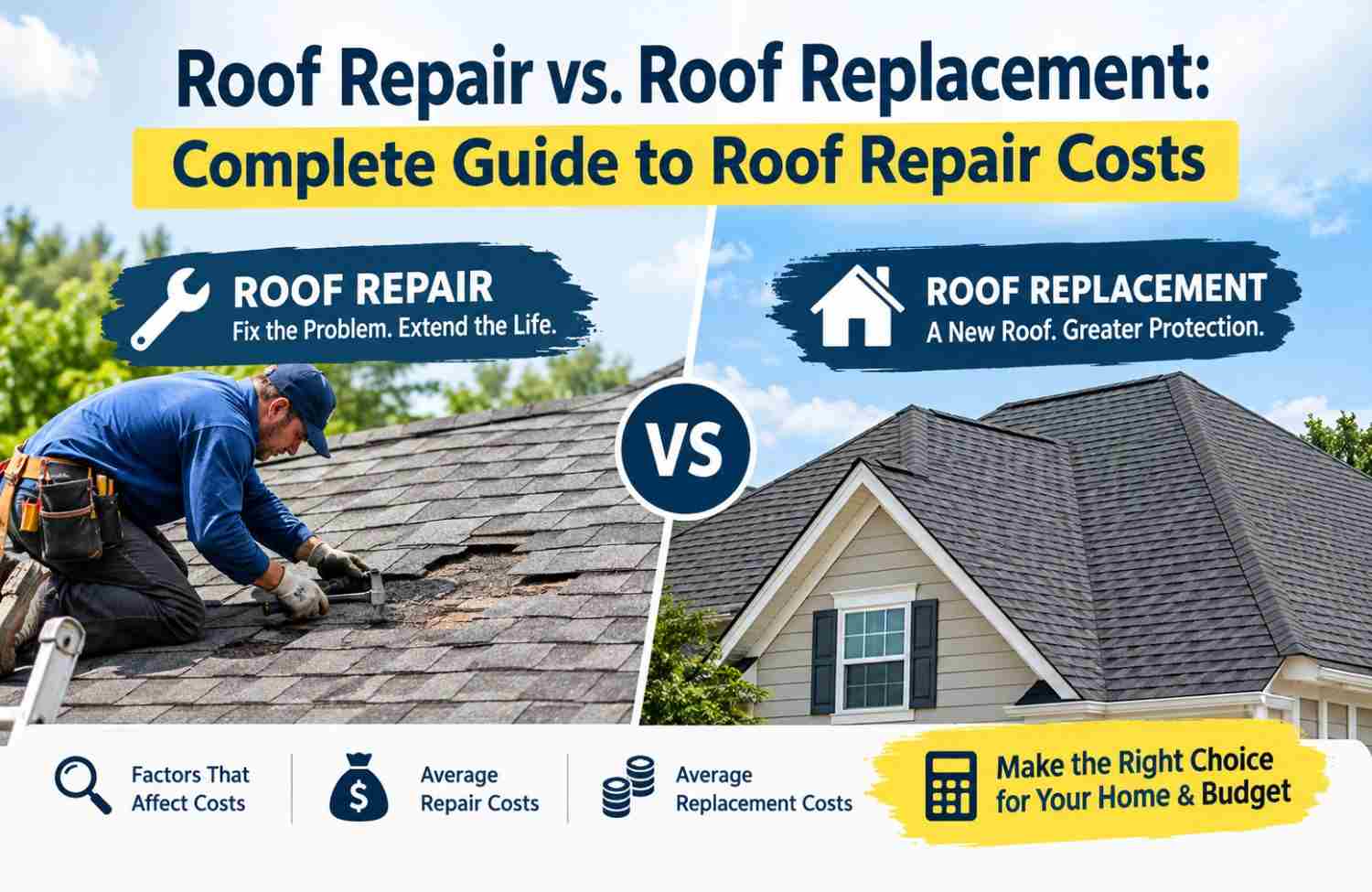
Deciding between roof repair and a full replacement is one of the more stressful choices a homeowner can face. The roof protects everything underneath it, so putting off a decision can lead to bigger problems and higher bills down the road. This guide breaks down when a repair makes sense, when replacement is the smarter investment, and what factors actually drive roof repair costs so you can make a confident, informed decision.
Understanding the Difference Between Repair and Replacement
Roof repair addresses a specific, limited problem such as a leak, a few missing shingles, or damaged flashing. It is generally faster, less invasive, and far more affordable than tearing off an entire roof system. A full replacement, on the other hand, involves removing the old roofing material down to the decking and installing an entirely new system from the ground up.
Choosing to repair rather than replace is usually the right move when damage is isolated and the rest of the roof is still in good shape. Replacement becomes necessary when the roof has widespread damage, has reached the end of its expected lifespan, or when repeated patch jobs are no longer solving the underlying problem.
Signs You May Only Need Roof Repair
Not every issue with your roof signals a total replacement. Here are common situations where a repair is typically enough.
A Small Number of Missing or Damaged Shingles
If wind or a storm knocked loose a handful of shingles but the rest of the roof remains intact, a straightforward roof repair can usually solve the problem. Contractors can match existing shingles in most cases, especially if the roof is less than ten years old.
Isolated Leaks
A single leak around a chimney, vent pipe, or skylight often points to a failed seal or damaged flashing rather than a systemic roofing problem. This kind of issue is usually resolved with a targeted repair rather than a full tear off.
Minor Storm Damage
Hail or wind damage that affects a small section of the roof, rather than the entire surface, is often a candidate for roof repair. A qualified inspector can determine whether the damage is contained or has compromised a larger portion of the roofing system.
Ponding Water in One Area
If water is pooling in a specific low spot on a flat or low slope roof, correcting the drainage in that one section may solve the issue without requiring a full replacement.
Signs You Likely Need a Full Roof Replacement
Some situations go beyond what a simple fix can handle and call for a complete replacement instead.
The Roof Is Near or Past Its Expected Lifespan
Asphalt shingle roofs typically last between 20 and 25 years, while metal roofs can last 40 to 70 years depending on the material. If your roof is approaching or has surpassed its expected lifespan, continued roof repair work often becomes a losing battle against ongoing deterioration.
Widespread Granule Loss
Finding large amounts of granules in gutters or at the base of downspouts is a sign that shingles are breaking down across the entire roof, not just in one spot. At this stage, a patch job tends to be a temporary fix rather than a lasting solution.
Sagging Roof Deck
A sagging or uneven roofline often indicates structural damage to the decking or supports underneath the shingles. This is a serious issue that goes beyond surface level roof repair and typically requires a full replacement to address safely.
Frequent, Recurring Leaks
If you find yourself scheduling roof repair for leaks multiple times within a year or two, the roofing material itself may be failing. At that point, continuing to pay for repeated service calls often costs more over time than investing in a new roof.
Visible Light Through the Attic
If daylight is visible through the roof boards from inside the attic, this indicates gaps or damage extensive enough that a standard repair is unlikely to provide a durable fix.
What Influences Roof Repair Costs
Roof repair costs vary widely depending on several factors. Understanding these variables helps you evaluate whether a quote you receive is reasonable.
Extent of the Damage
The most significant factor in roof repair costs is how much of the roof needs attention. Fixing a few shingles costs far less than repairing a large section damaged by a fallen branch or a severe storm.
Roofing Material
Roof repair costs differ depending on whether you have asphalt shingles, metal panels, tile, or a flat membrane roof. Specialty materials like slate or tile typically cost more to fix because they require specialized skills and materials that are less commonly stocked.
Roof Accessibility
A steep roof or one with multiple stories increases both the labor and safety requirements for a crew, which can raise roof repair costs compared to a simple, easily accessible single story roof.
Underlying Damage
Sometimes an estimate increases once a contractor gets a closer look and discovers damaged decking, rotted wood, or mold underneath the surface. Addressing this hidden damage is essential, even though it adds to the overall roof repair costs.
Labor Rates and Location
Roof repair costs are also influenced by regional labor rates, permit requirements, and the time of year. Contractors are often busiest after major storms, which can affect both pricing and availability.
Repair vs. Replacement: A Cost Comparison Approach
When weighing roof repair against replacement, it helps to think beyond the immediate price tag.
Short Term Savings vs. Long Term Value
A repair is almost always cheaper upfront than replacement. However, if your roof is old or has multiple areas of concern, the cumulative cost of several repair jobs over a few years can approach or exceed the cost of simply replacing the roof once.
Impact on Home Value
A newer roof can be a selling point when listing a home, while a roof with a long history of patchwork repairs may raise concerns for potential buyers or inspectors. Consider how close you are to selling when deciding between repair and replacement.
Energy Efficiency Considerations
Replacing a roof offers an opportunity to improve energy efficiency in ways that a simple repair typically cannot. The Department of Energy and the Environmental Protection Agency jointly manage the ENERGY STAR roofing program, which highlights reflective roofing materials designed to keep buildings cooler and lower air conditioning costs. According to the Cool Roof Rating Council, reflective roofing can reduce cooling costs by roughly seven to fifteen percent compared to a standard dark roof. If your roof is due for replacement anyway, choosing a cool roof product can add long term energy savings that patchwork roof repair would not provide.
Insurance Considerations
Homeowners insurance may cover repair or replacement costs depending on the cause of damage, such as a storm or fallen tree, and the age and condition of the roof at the time of the claim. Reviewing your policy and consulting your insurer before starting any work can clarify what portion of the cost you may be responsible for.
Questions to Ask Before Choosing Repair or Replacement
Before committing to either option, it helps to ask a few key questions.
How Old Is the Roof?
Knowing the age of your roof relative to its expected lifespan is one of the clearest indicators of whether roof repair or replacement makes more sense.
Is the Damage Isolated or Widespread?
A thorough inspection should clarify whether the issue is confined to one area, which favors a repair, or spread across the roof, which points toward replacement.
What Does the Contractor’s Written Estimate Include?
A detailed roof repair estimate should specify materials, labor, and any additional work needed if hidden damage is found. Vague estimates make it harder to compare pricing across contractors.
How Many Layers of Shingles Are Already on the Roof?
Some homes have multiple layers of shingles from past roofing jobs. Building codes often limit how many layers are allowed, which can affect whether a simple repair is even possible or if a full tear off is required.
Will the Repair Address the Root Cause?
A leak caused by poor ventilation or ice damming may return even after a roof repair if the underlying cause is not addressed. Ask your contractor whether the proposed fix targets the actual source of the problem or simply patches the symptom.
How to Choose a Qualified Roofing Contractor
Whether you need roof repair or a full replacement, hiring the right contractor matters just as much as the decision itself.
Verify Licensing and Insurance
Confirm that any contractor performing roof repair or replacement work carries proper licensing and liability insurance. This protects you if property damage or injury occurs during the project.
Get Multiple Written Estimates
Collecting two or three written estimates for the repair or replacement work allows you to compare pricing, scope of work, and materials before making a decision. Be cautious of estimates that are significantly lower than others, as this can indicate corners being cut.
Ask About Warranties
A reputable contractor should offer a workmanship warranty on repair labor in addition to any manufacturer warranty on materials. Understanding what each warranty covers helps you avoid unexpected costs if problems arise later.
Check References and Reviews
Look for contractors with a consistent history of completed roof repair and replacement projects in your area. Local reviews and references can reveal how a contractor handles both routine work and unexpected complications.
Preventive Maintenance That Can Delay Costly Repairs
A little routine upkeep can reduce how often you need roof repair services in the first place.
Schedule Regular Inspections
Having a professional inspect your roof once or twice a year, and after any major storm, helps catch small problems while they are still cheap and easy to fix. Catching an issue early often means the difference between a minor repair and a much larger project.
Keep Gutters Clean
Clogged gutters can cause water to back up under shingles, leading to rot and leaks that eventually require repair. Cleaning gutters at least twice a year is a simple, low cost habit that protects the roof edge and fascia boards.
Trim Overhanging Branches
Branches that hang over the roof can scrape shingles during windy weather and drop debris that traps moisture. Trimming trees back reduces the chances of storm damage that would otherwise call for emergency repair work.
Address Small Issues Right Away
A missing shingle or a small soft spot on the decking is far cheaper to fix immediately than to leave alone until it grows into a larger, more expensive problem. Addressing minor concerns quickly is one of the most effective ways to avoid a major repair bill later.
Making the Final Decision
There is no universal answer to whether roof repair or replacement is the right choice, since every roof and every homeowner’s situation is different. As a general guide, repair tends to make sense when damage is limited, the roof is relatively young, and the rest of the roofing system is in solid condition. Replacement becomes the more practical option when the roof is old, damage is widespread, or repeated repair costs are adding up without resolving the underlying issue.
Taking the time to get a professional inspection, gather multiple estimates, and understand the true condition of your roof will help you avoid overspending on unnecessary roof repair work or, on the other end, delaying a replacement until minor damage turns into a major structural problem.
Final Thoughts on Roof Repair and Replacement
Roof repair and roof replacement each serve a purpose depending on the extent of the damage and the overall condition of your roof. By understanding what drives roof repair costs, recognizing the warning signs that point toward replacement, and asking the right questions before hiring a contractor, you can protect your home and your budget at the same time. Whether you end up scheduling a simple roof repair or planning a full replacement, making an informed decision now can prevent costly surprises later.