
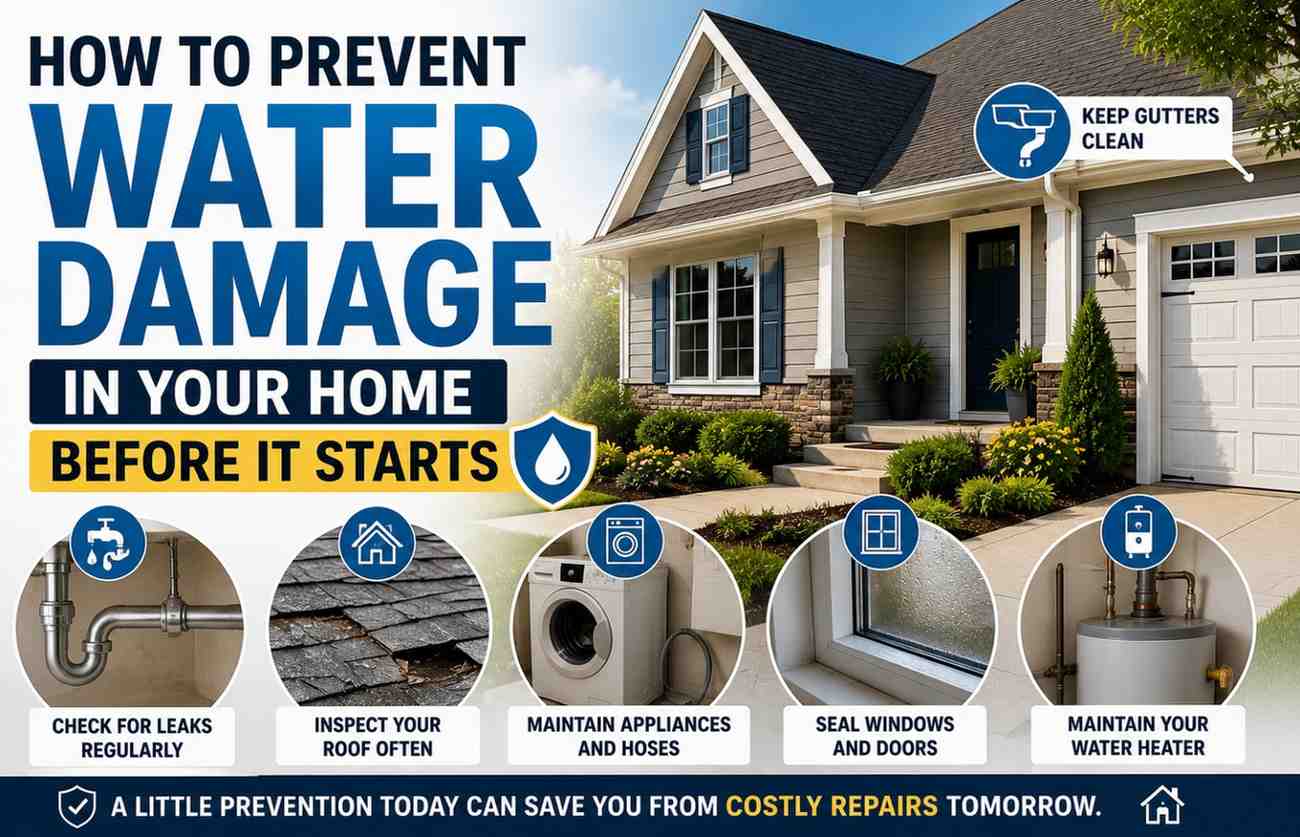
Water damage is one of the most expensive and disruptive things that can happen to an American home. It hides inside walls, under floors, and above ceilings for weeks before making itself known, and by the time you see the stain on the ceiling or the warped floorboard, the damage behind it is almost always far worse than what is visible.
The good news is that most water damage is preventable. Not with expensive systems or major renovations, but with consistent attention to the areas of your home most likely to fail and the habits that catch small problems before they become large ones. Knowing how to prevent water damage is one of the most valuable things a homeowner can learn, and the time it takes to do it is a fraction of the time, money, and stress that water damage recovery demands.
This guide covers every area of your home where water damage starts and exactly what to do to prevent water damage in each one.
Why Preventing Water Damage Matters More Than You Think
Before getting into specific prevention strategies, consider the scale of the problem. According to the Insurance Information Institute (https://www.iii.org), water damage and freezing is the second most common homeowner insurance claim in the United States, surpassed only by wind and hail damage. The average water damage claim costs over $11,000, and that figure does not account for the deductible, the rate increase that follows a claim, or the disruption of living in a home undergoing water remediation.
More concerning is the mold that follows water damage. The EPA (https://www.epa.gov/mold) states that mold can begin growing on wet building materials within 24 to 48 hours of water exposure. Once mold establishes itself inside a wall or under a floor, remediation becomes significantly more expensive than the original water damage repair. Preventing water damage is therefore also the most effective way to prevent mold.
The investment required to prevent water damage is a fraction of what it costs to repair it. Every hour spent on prevention is worth multiple days of repair, remediation, and the stress that comes with both.
Your Roof Is the First Line of Defense
When homeowners think about how to prevent water damage, the roof is where the conversation has to start. The roof is your home’s primary barrier against the single largest source of water in your environment, and a roof that is failing allows water to enter the home in ways that damage everything below it before you have any idea it is happening.
Inspect your roof twice a year, ideally in spring and fall. You do not need to climb up there yourself. A pair of binoculars and a careful look from the ground will reveal missing or curled shingles, damaged flashing around chimneys and vents, and sagging areas that indicate structural issues beneath the surface. If you see anything that concerns you, have a licensed roofing contractor assess it before the next rainy season.
Flashing is the metal material that seals the joints between your roof and vertical surfaces like chimneys, skylights, and vent pipes. It is one of the most common points of water entry in residential roofs and one that is easy to overlook because it requires getting close to see clearly. Cracked, lifted, or missing flashing allows water to run directly into the wall assembly below it with every rain.
Keep your gutters clean and functioning. A gutter system that is clogged with debris causes water to back up and overflow, running down the exterior walls and pooling at the foundation rather than being directed away from the home. Clean gutters at least twice a year, in late spring after trees have finished shedding and in late fall after the leaves have dropped. Make sure downspouts extend at least four to six feet away from the foundation and that the ground slopes away from the house in every direction.
Plumbing Is Where Most Interior Water Damage Starts
If your goal is to prevent water damage inside the home, the plumbing system is where most of your attention belongs. Pipe leaks, supply line failures, and appliance connections are responsible for the majority of interior water damage claims in American homes, and most of them are detectable before they become catastrophic.
Check under every sink in your home at least once a month. Look for moisture on the cabinet floor, water stains on the cabinet walls, and any sign of active dripping from the supply lines or drain connections. A slow drip under the sink that is caught early costs almost nothing to fix. The same drip ignored for six months can cause significant cabinet and floor damage and begin growing mold inside the cabinet wall.
Washing machine supply hoses are one of the most commonly overlooked sources of catastrophic water damage. Standard rubber supply hoses have a lifespan of about five years and fail without warning, often releasing the full water pressure of your supply line into the laundry room. The resulting damage can affect multiple rooms and floors. Replace rubber supply hoses with braided stainless steel hoses, which last significantly longer and are far more resistant to sudden failure. The Specialty Valve and Controls Council recommends replacing washing machine hoses every five years regardless of visible condition.
Your water heater is another major risk area. Most water heaters have a lifespan of eight to twelve years, and a failing water heater can leak slowly for weeks before failing completely and releasing its entire tank volume onto your floor. Check the base of your water heater monthly for any moisture, rust staining, or corrosion. If your water heater is approaching or past ten years old and showing any signs of exterior rust or moisture, replacement is cheaper than the damage a full failure causes.
Installing a whole-house water shut-off valve that can be controlled remotely or automatically is one of the most effective ways to prevent water damage from an undetected leak. Smart water sensors placed under sinks, behind the washing machine, and near the water heater alert you to moisture the moment it appears, giving you the ability to respond before a drip becomes a flood. The U.S. Department of Energy (https://www.energy.gov) recommends smart leak detection as part of any comprehensive home water management strategy.
Your Basement and Foundation Need Regular Attention
Water that enters through the foundation or basement walls is among the most damaging and most expensive to remediate, and it is also among the most preventable with consistent maintenance habits.
The grading around your home’s foundation is the first thing to evaluate. The ground should slope away from the house in every direction at a minimum grade of six inches over ten feet. When the ground is flat or slopes toward the foundation, every rainfall directs water toward your home rather than away from it. Correcting improper grading with additional soil and regrading is one of the highest-return investments available for homeowners trying to prevent water damage at the foundation level.
Window wells on basement windows collect water and direct it toward the window if they are not properly drained and covered. Install window well covers to keep out rain and debris, and check that the gravel at the bottom of each well is draining freely rather than holding standing water against the window frame.
Check your basement walls and floor annually for any signs of moisture intrusion. White chalky deposits on concrete walls, called efflorescence, indicate that water is moving through the concrete and evaporating on the surface. Staining at the base of walls, a persistent musty smell, and visible moisture on walls during or after heavy rain are all signs that water is finding a path into the space.
Seal any cracks in the foundation walls and floor with an appropriate hydraulic cement or waterproofing sealant. Small cracks that are actively leaking require professional assessment, as they may indicate structural movement rather than simple surface cracking.
A sump pump is essential in any basement or crawl space that collects water. Test your sump pump at least twice a year by pouring water into the pit and confirming it activates and drains properly. Install a battery backup for the sump pump so it continues operating during the power outages that often accompany the heavy storms most likely to challenge it.
Bathrooms Are a Constant Source of Water Damage Risk
Bathrooms are the room where water is most consistently present, which makes them a chronic source of water damage risk that requires ongoing attention to prevent water damage from developing quietly over time.
Caulking around the tub, shower, and sink is the primary barrier preventing water from reaching the wall assembly and subfloor behind and beneath the fixture. Caulk that has cracked, separated, or turned moldy is no longer functioning as a barrier. Water entering through compromised caulk reaches the wall framing and subfloor where it causes rot and mold that may not be visible for months or years.
Inspect the caulking in every bathroom twice a year and re-caulk any areas showing separation, cracking, or mold. This is one of the simplest and most cost-effective ways to prevent water damage in the home. A tube of bathroom caulk costs a few dollars and thirty minutes of work. The rot and mold remediation that follows years of failed caulking costs thousands.
The toilet wax ring, which seals the connection between the toilet base and the drain flange, fails over time and allows water to seep out at the base of the toilet with every flush. Signs of a failing wax ring include staining or soft flooring around the base of the toilet and a toilet that rocks or moves when pressure is applied. A rocking toilet is actively damaging the wax ring with every use. Replace the wax ring and secure the toilet immediately when these signs appear.
Exhaust fans in bathrooms serve a specific purpose in water damage prevention that most homeowners underestimate. Without adequate ventilation, the moisture from showers and baths condenses on walls, ceilings, and inside wall cavities, leading to mold and wood rot that develops invisibly over time. Run the exhaust fan during every shower and for at least fifteen minutes afterward. If your bathroom does not have an exhaust fan or the existing fan is inadequate, installing a properly sized unit is one of the most cost-effective ways to prevent water damage from chronic moisture.
Appliances That Cause Water Damage
Several common household appliances present significant water damage risk that is easy to prevent water damage from with basic maintenance and monitoring.
The refrigerator ice maker water line is a common source of slow leaks that go undetected behind the refrigerator for months. Pull your refrigerator out from the wall annually and check the water supply line for any kinking, cracking, or moisture. Replace plastic or braided lines with copper tubing if possible, as copper is significantly more durable.
Dishwashers leak most commonly at the door seal and at the water supply connection under the sink. Check both areas periodically for any signs of moisture on the floor in front of the dishwasher and inside the cabinet under the sink near the supply connection.
Air conditioners, both central systems and window units, produce condensation that must drain properly. A central air conditioner with a clogged condensate drain line backs up water into the drain pan, which eventually overflows and causes ceiling damage in the room below the air handler. Check the condensate drain line annually as part of your HVAC maintenance and keep it clear with a flush of white vinegar.
Creating a Water Damage Prevention Routine
The most effective way to prevent water damage consistently is to build inspection habits into your regular home maintenance routine rather than treating water damage prevention as an occasional project.
Monthly, check under every sink for moisture, look at the base of the water heater and washing machine, test the sump pump if you have one, and clear any debris from window wells.
Seasonally, clean gutters and check downspout extensions, inspect roof condition and flashing, check all caulking in bathrooms and kitchens, and assess the grading around your foundation after any significant settling.
Annually, replace washing machine hoses if they are more than five years old, have the HVAC condensate drain line flushed, inspect the water heater for any signs of rust or corrosion, and walk the perimeter of your foundation looking for new cracks or grading issues.
These habits take a few hours per year in total. They are the most reliable way to prevent water damage from the slow, invisible sources that cause the most expensive and disruptive damage in American homes.
Water damage does not usually announce itself. It works quietly in the dark behind walls and under floors until it cannot be ignored anymore. The homeowners who prevent it are the ones who go looking for it before it finds them.