
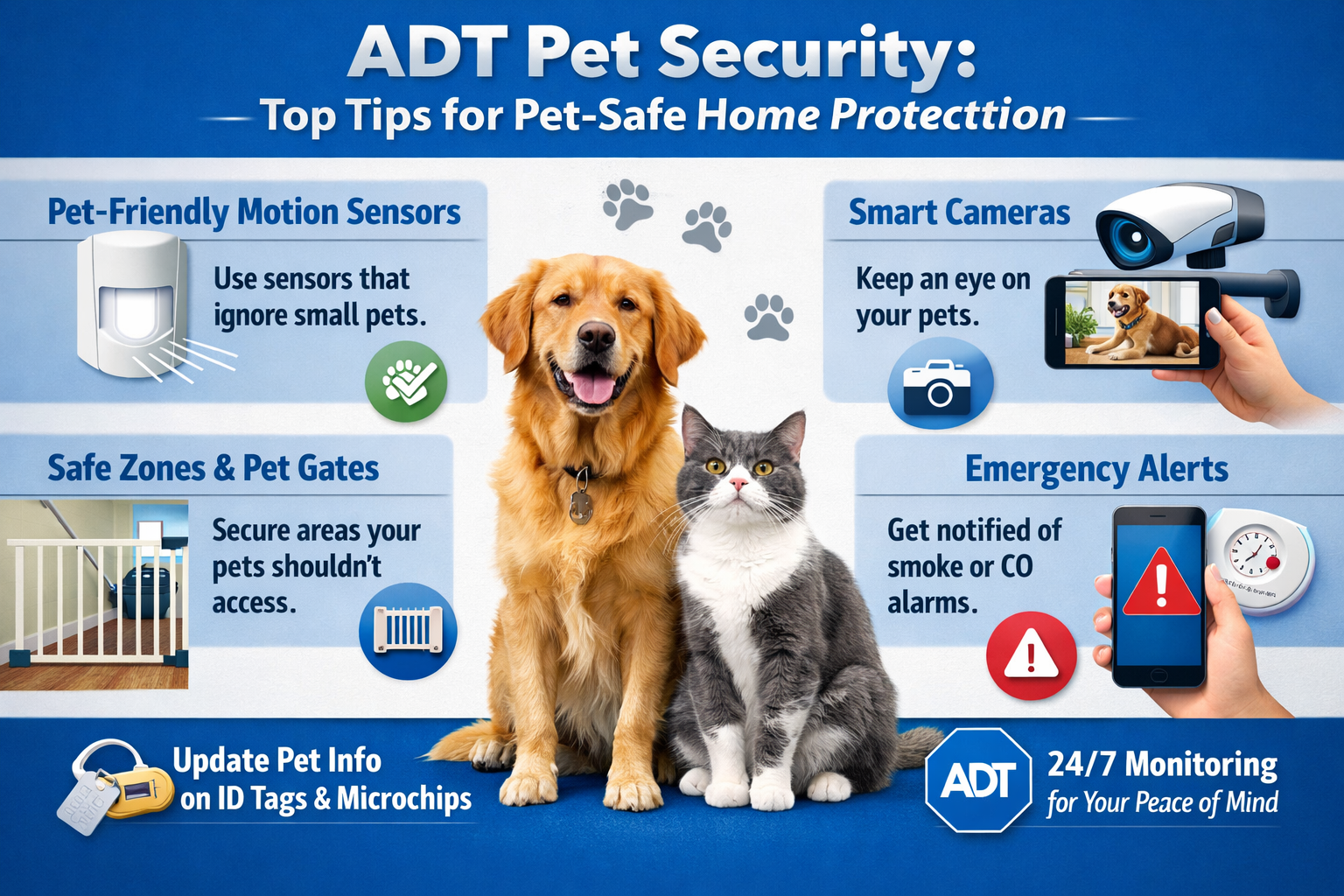
If you’re a pet owner, you know that our furry friends are family. They’re not just animals living in our homes, they’re our companions, our stress relievers, and sometimes, our best friends. So when it comes to protecting your home with a security system, the last thing you want is for your beloved pet to trigger false alarms or feel stressed by the system.
The good news? ADT has designed pet-friendly security solutions that keep your home safe while letting your pets roam freely. Let’s talk about how you can protect your home without compromising your pet’s comfort and freedom.
Understanding the Pet Problem with Traditional Security Systems
Before we dive into solutions, let’s talk about why pets and security systems don’t always get along.
Traditional motion sensors are designed to detect movement in your home. They’re supposed to catch intruders, but here’s the problem: they can’t always tell the difference between a burglar and your 60-pound Golden Retriever running to greet you at the door. Or your cat jumping from the couch to the windowsill at 3 AM.
This leads to false alarms. And false alarms aren’t just annoying, they can result in fines from your local police department, make you less likely to trust your system, and cause unnecessary stress for both you and your pets.
That’s exactly why ADT developed pet-immune technology. It’s designed to let your pets move around naturally while still protecting your home from actual intruders.
What Makes ADT Pet-Friendly?
ADT’s pet-immune motion sensors use advanced technology to distinguish between your pets and potential threats. Here’s how they work:
The sensors analyze the size, shape, and heat signature of whatever is moving in your home. They’re calibrated to ignore animals up to a certain weight, typically around 60 to 80 pounds, depending on the specific sensor model. This means your dog or cat can walk around freely without setting off the alarm.
But here’s the important part: these sensors don’t just look at weight. They also consider how the movement occurs. Pets move differently than humans. They’re lower to the ground, and their movement patterns are distinct. ADT’s smart sensors take all of this into account.
Top Tips for Setting Up Pet-Safe Home Protection
1. Be Honest About Your Pet’s Weight and Habits
When you’re setting up your ADT system, don’t guess about your pet’s weight. Weigh them accurately. If your dog is 55 pounds now but tends to gain weight in winter, mention that. If you have multiple pets, add up their combined weight, because if they move together, the sensor sees that combined mass.
Also, be upfront about your pet’s habits. Does your cat like to climb on furniture? Does your dog jump up to look out the windows? These behaviors matter because they can affect sensor placement and settings.
2. Strategic Sensor Placement is Everything
Where you place your motion sensors can make or break your pet-friendly security setup. Here are some practical placement tips:
Mount sensors higher: Instead of placing motion sensors at the typical 6-7 foot height, mounting them at 7-8 feet can help them “look over” your pets while still detecting human-sized intruders.
Angle them carefully: Point sensors down toward entry points rather than across open spaces where pets roam. This focuses detection on areas where intruders would enter, not where your pets hang out.
Avoid pet highways: Don’t place sensors directly above your pet’s favorite pathways. If your dog always walks down the same hallway to get to their water bowl, that’s not the best spot for a motion sensor.
Keep them away from pet furniture: If your cat has a tower they love to climb, or your dog has a favorite couch they jump on, keep sensors away from these spots.
3. Use Door and Window Sensors as Your First Line of Defense
Here’s a secret that many ADT customers learn: door and window sensors are your best friends when you have pets. These sensors detect when doors or windows are opened; they don’t care about movement inside your home.
For many pet owners, a system heavily focused on door and window sensors, with just a few strategically placed motion sensors, works better than lots of motion sensors everywhere. This approach lets your pets have maximum freedom while still securing all entry points.
4. Create a Pet-Free Zone (If Possible)
I know, I know, easier said than done. But if you can train your pets to stay out of certain areas when you’re away, it makes security setup much simpler.
This doesn’t mean locking them up. It just means creating a comfortable space where they have everything they need: food, water, toys, a comfy bed, and where you’ve minimized sensor sensitivity. Some pet owners use baby gates to create these zones, especially for smaller dogs.
5. Test Your System Regularly with Your Pets
Once your ADT system is installed, don’t just assume it’s working correctly. Do regular tests:
Set your alarm and let your pets move around normally. Walk your dog through their usual routes. Let your cat climb to their favorite spots. If the alarm goes off, you need to adjust something.
Do this testing at different times of day. Lighting can affect how sensors work, and your pet might have different activity patterns in the morning versus the evening.
6. Consider Your Pet’s Size and Number
The standard rule is that ADT pet-immune sensors work with pets up to 60-80 pounds, but this isn’t one-size-fits-all:
Small pets (under 40 pounds): You’ll have the easiest time. Most standard pet-immune sensors will work perfectly.
Medium pets (40-60 pounds): Still good, but sensor placement becomes more important. Work closely with your ADT installer.
Large pets (60-100 pounds): You’ll need more careful planning. Consider relying more heavily on door/window sensors and placing motion sensors very strategically.
Multiple pets: If you have three cats that like to play together, or two dogs that wrestle, their combined presence might trigger sensors. Plan accordingly.
Very large pets (over 100 pounds): Standard pet-immune sensors might not work. Focus on perimeter protection (doors and windows) and consider glass break sensors.
What About Cats? The Special Case of Climbing Pets
Cats present a unique challenge because they don’t just walk around: they jump, climb, and somehow end up in places you didn’t think were possible.
Here’s how to handle cat-specific situations:
Vertical jumpers: If your cat likes to jump up to high places, mount your sensors even higher and angle them to minimize the cat’s heat signature when they’re elevated.
Curtain climbers: Keep motion sensors away from windows with curtains that cats climb. The combination of movement and elevation can trigger sensors.
Nighttime adventurers: Cats are often most active at night when you’re asleep, and the alarm is set. Make sure your system accounts for this nocturnal activity.
Glass Break Sensors: A Pet-Friendly Alternative
Glass break sensors are another excellent option for pet owners. These sensors listen for the specific frequency of breaking glass. Your pet can run, jump, bark, or meow all they want; it won’t trigger these sensors. They only activate when the glass actually breaks.
For homes with lots of windows or glass doors, adding glass break sensors to your ADT system can provide excellent protection without any pet interference concerns.
The Importance of Professional Installation
While some security systems are DIY, I strongly recommend professional installation for pet owners. Here’s why:
ADT technicians have experience with pet-friendly installations. They can assess your home’s layout, understand your pet’s habits, and configure the system optimally. They’ll also test it with your pets present, making adjustments on the spot.
During installation, be present and engaged. Walk through your home with the technician while your pets are there. Point out your pet’s favorite spots, their typical routines, and any concerns you have.
Using Your ADT System Wisely with Pets
Once your system is installed, here are some smart habits:
Stay mode: Use ADT’s “Stay” mode when you’re home. This typically keeps door and window sensors active, but may disable or reduce the sensitivity of interior motion sensors. Perfect for when you’re home with your pets.
Away mode: When you leave, use “Away” mode for full protection. Make sure your pets are in a comfortable space where they won’t trigger sensors.
Update ADT when things change: Got a new pet? Did your pet gain or lose significant weight? Are their habits different? Let ADT know so they can adjust your system if needed.
Reducing Pet Stress with Your Security System
Security systems can stress some pets, especially dogs who are sensitive to sounds. Here are some tips:
Gradually introduce alarm sounds: Before fully activating your system, let your pets hear the entry beep and exit beep sounds at low volumes. Gradually increase volume so they get used to it.
Create positive associations: Give treats when the alarm beeps. This helps your pet associate the sound with something good rather than something scary.
Consider volume settings: ADT systems often let you adjust beep volumes. Find a level that alerts you without terrifying your pet.
Camera comfort: If you’re adding ADT cameras, some pets react to the little lights on the cameras. Most adjust quickly, but if your pet seems bothered, cameras with minimal indicator lights are available.
ADT Video Monitoring: Keeping an Eye on Your Pets
One bonus of ADT’s modern systems? The video monitoring doesn’t just protect your home, it lets you check on your pets when you’re away. Many ADT customers love being able to peek at their pets throughout the day. It’s not just about security; it’s about peace of mind knowing your furry friend is okay.
Some ADT cameras even have two-way audio, so you can talk to your pet remotely. While I can’t promise your dog will listen any better through a camera than in person, it’s a nice feature to have!
Common Myths About Pet-Friendly Security Systems
Let’s bust some myths:
Myth: Pet-friendly systems are less secure. Truth: They’re just as secure. They simply use smarter technology to differentiate between pets and threats.
Myth: You can’t have motion sensors if you have pets. Truth: You can absolutely have motion sensors; they just need to be pet-immune and properly configured.
Myth: Pet-friendly systems are much more expensive. Truth: Pet-immune sensors are standard with most ADT packages. You’re not paying a huge premium for pet-friendliness.
Myth: Once installed, the system will always work perfectly with pets. Truth: Your pet’s behavior might change, or you might get new pets. Be prepared to adjust your system over time.
Final Thoughts: Peace of Mind for You and Your Pets
At the end of the day, home security should make you feel safer, not create stress or limit your pet’s freedom. ADT’s pet-friendly technology makes it possible to have both security and a happy home environment for your pets.
The key is communication: be clear with your ADT installer about your pets, test thoroughly, and don’t hesitate to request adjustments if something isn’t working right. Your pets are family, and your security system should treat them that way.
With the right setup, you can leave for work knowing your home is protected and your pets are comfortable. You can sleep soundly knowing the system will catch real threats without being triggered by your cat’s midnight zoomies. And isn’t that peace of mind what home security is really all about?
Remember, every home and every pet is unique. What works for a home with one small dog might not work for a home with three large dogs and two cats. That’s why ADT offers customized solutions. Work with them to create a system that fits your specific situation, and you’ll have the best of both worlds: a secure home and happy, free-roaming pets.
Stay safe, and give your pets an extra treat today; they’re not just living in your protected home; they’re part of what makes it worth protecting.